DO VENTS COMPROMISE HELMET PROTECTION?
In 1969, this was a serious question. As construction activity increased across North America, safety managers and manufacturers were under pressure to reduce workplace head injuries. Workers were spending long hours in hot environments. Heat stress was becoming a real concern. Manufacturers began exploring whether airflow could be introduced into helmets to improve comfort without compromising safety. That proposal raised skepticism:

To answer those concerns, ANSI tested evaluated helmets for:

The results showed that airflow could be engineered into industrial helmets without sacrificing impact performance, as long as they met established testing thresholds.
This led to the formal recognition of Class C (Conductive) helmets, designed for environments where impact protection is critical, electrical protection is not required, and users can keep their head cool.
HEAT STRESS ON THE JOB: WHAT THE DATA SHOWS
Heat exposure on the job is a serious and measurable risk. According to OSHA, thousands of workers experience heat-related illnesses each year, with dozens of fatalities reported annually. Construction and industrial workers face heightened risk due to prolonged exposure to sun, high temperatures, and physically demanding tasks.
According to OSHA and BLS data, environmental heat caused:

To help reduce heat stress on the job, OSHA now enforces job sites (outdoor + indoor) to:
- Mandatory hydration
- Providing shaded or air-conditioned rest areas
- Creating acclimatization schedules for new workers
- Paid breaks + emergency plans for when temperatures reach 80°F or higher
For head protection, vented helmets are key to the overall heat management strategy.
THE ROLE OF VENTILATION ON THE JOB SITE
The head is one of the body’s primary heat release points. In high-temperature environments, excess heat becomes trapped at the crown especially under non-vented head protection. Over time, that buildup contributes to fatigue, reduced focus, and increased physical strain.
Long before workers experience heat exhaustion, elevated temperatures could impair:

For decades, traditional hard hats were built with one priority in mind:
IMPACT PROTECTION
Ventilation was rarely part of the equation and head protection was only determined by hazard assessment. As job sites evolved and workers spent longer hours in high-heat environments, the industry began to recognize a critical gap protection from impact alone wasn’t enough.
Employers are now able to consider vented helmets as part of the overall heat management strategy. Although Class C helmets were not specifically invented to prevent heat exposure on job sites, it slowly started to become recognized as such.
ENGINEERING THAT SETS DEFENDER APART
Because of concerns about structural integrity, many vented helmets use small, conservative openings. While technically vented, the airflow is limited in size and direction. This causes heat to be trapped. Air enters slowly, stagnates, and struggles to escape, creating a bottled heat effect during long shifts.
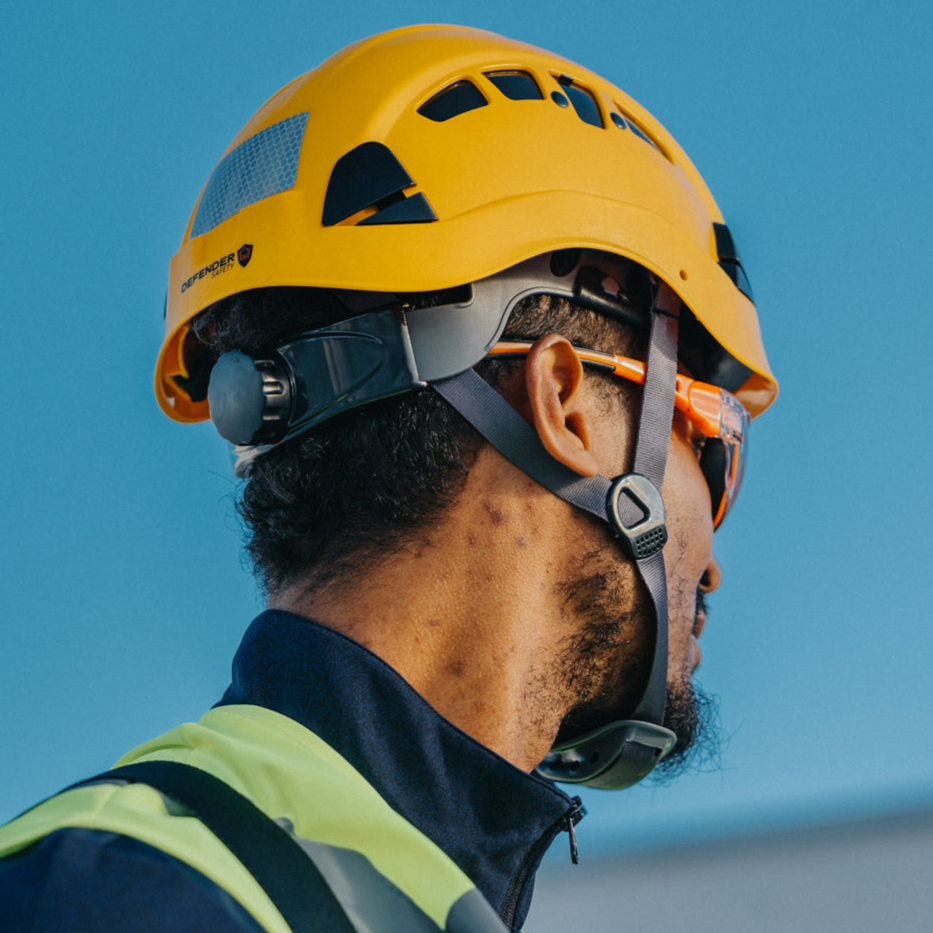
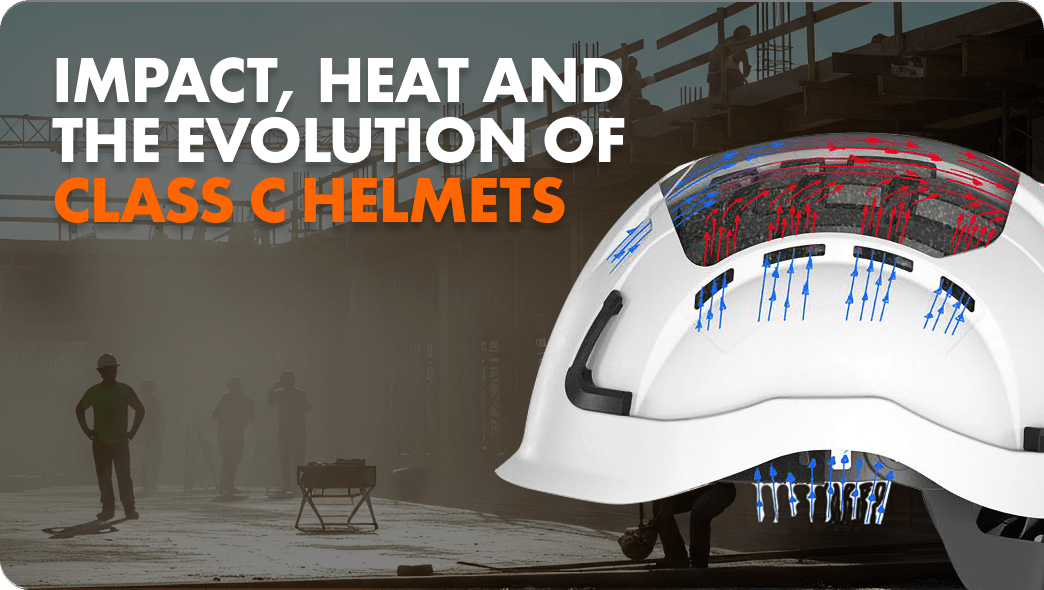
To solve this, the Defender Safety’s H2 features true 360° ventilation: front, side, and rear vents working together. While on the inside, we integrated EPS air channels that guide and accelerate airflow across the crown.
Ventilation was never an added bonus to our Class C helmets but a feature built in from the start. How it works:

This creates active thermal circulation, instead of passive venting.
Designed for real job site conditions, our Class C helmets are engineered to deliver more than certification compliance. The H2-CH is built not only to withstand impact but to manage the heat that comes with the job.
WHY DEFENDER SAFETY IS THE LEADING CHOICE IN SAFETY IN 2026
If you haven’t upgraded your crew to Defender safety helmets yet, now is the time. Designed for maximum protection some key features of our helmets are:

CUSTOMIZING YOUR DEFENDER SAFETY HELMET
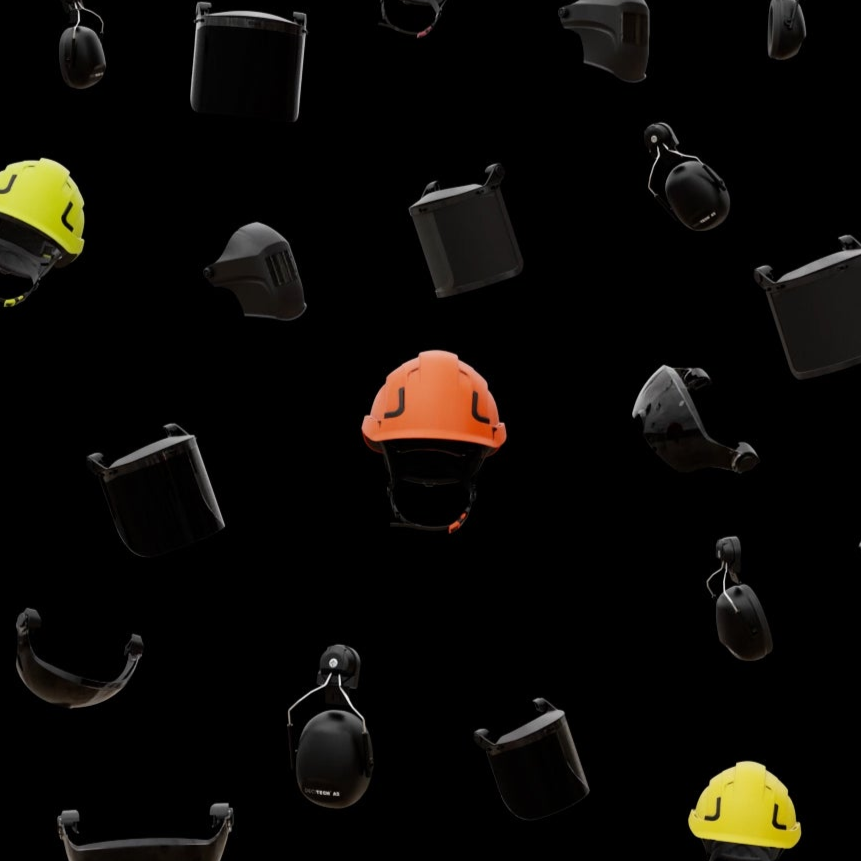
And because every job site — and every team — is different, Defender Safety helmets can be fully customized to meet your needs.
Ready to protect your team with helmets backed by real testing?