


Safety Helmets
Filters
18 products

FREQUENTLY ASKED QUESTIONS
Find answers to common questions about our safety helmets, accessories, industry standards and etc.
SAFETY HELMET BASICS
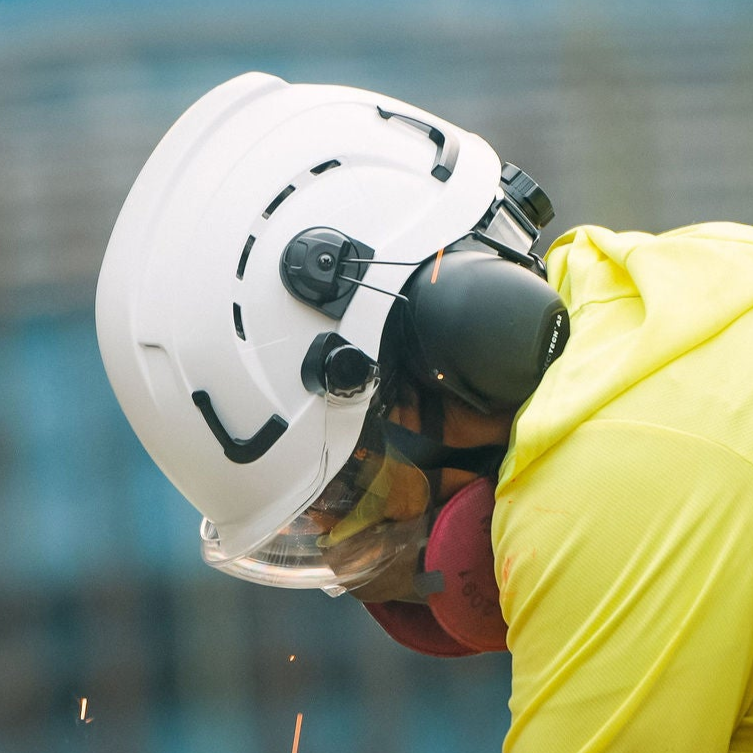
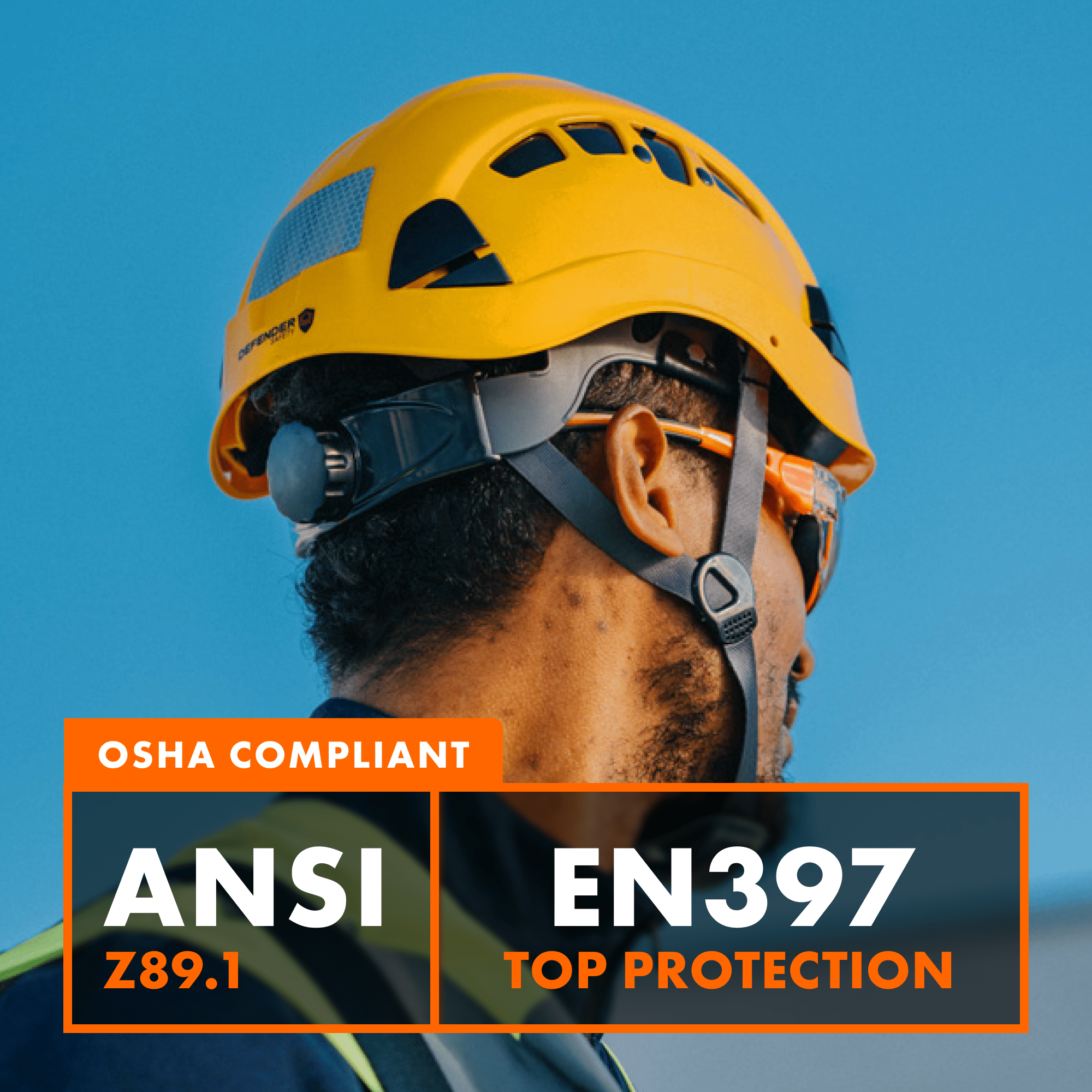
A safety helmet is a piece of personal protective equipment (PPE) designed to protect your head from falling objects, side impacts, electrical hazards, and other jobsite dangers. Unlike traditional hard hats that only protect the top of your head, modern safety helmets offer broader coverage -- including the sides, front, and back. They typically include chin straps, suspension systems, and compatibility with accessories like visors and earmuffs. Defender Safety helmets meet ANSI/ISEA Z89.1 and EN 12492 standards, making them compliant for construction, electrical, industrial, and work-at-height applications.
Hard hats and safety helmets both provide head protection, but they are not the same. Traditional hard hats sit loosely on top of your head with no chin strap, only protecting against impacts from above. Safety helmets hug your head with a secure fit, include a chin strap to stay in place during falls or slips, and protect against impacts from the top, sides, front, and back. Safety helmets also integrate easily with accessories like face shields, earmuffs, and headlamps. In December 2023, OSHA required all of its own field staff to switch from traditional hard hats to safety helmets. The industry is following suit.
Construction helmets are a category of safety helmets. The term "safety helmet" covers head protection for all industries -- construction, manufacturing, oil and gas, electrical, arboriculture, and more. When people say "construction helmet," they typically mean an ANSI Z89.1-compliant safety helmet rated for construction jobsite hazards. All Defender Safety helmets are designed for construction and industrial use.
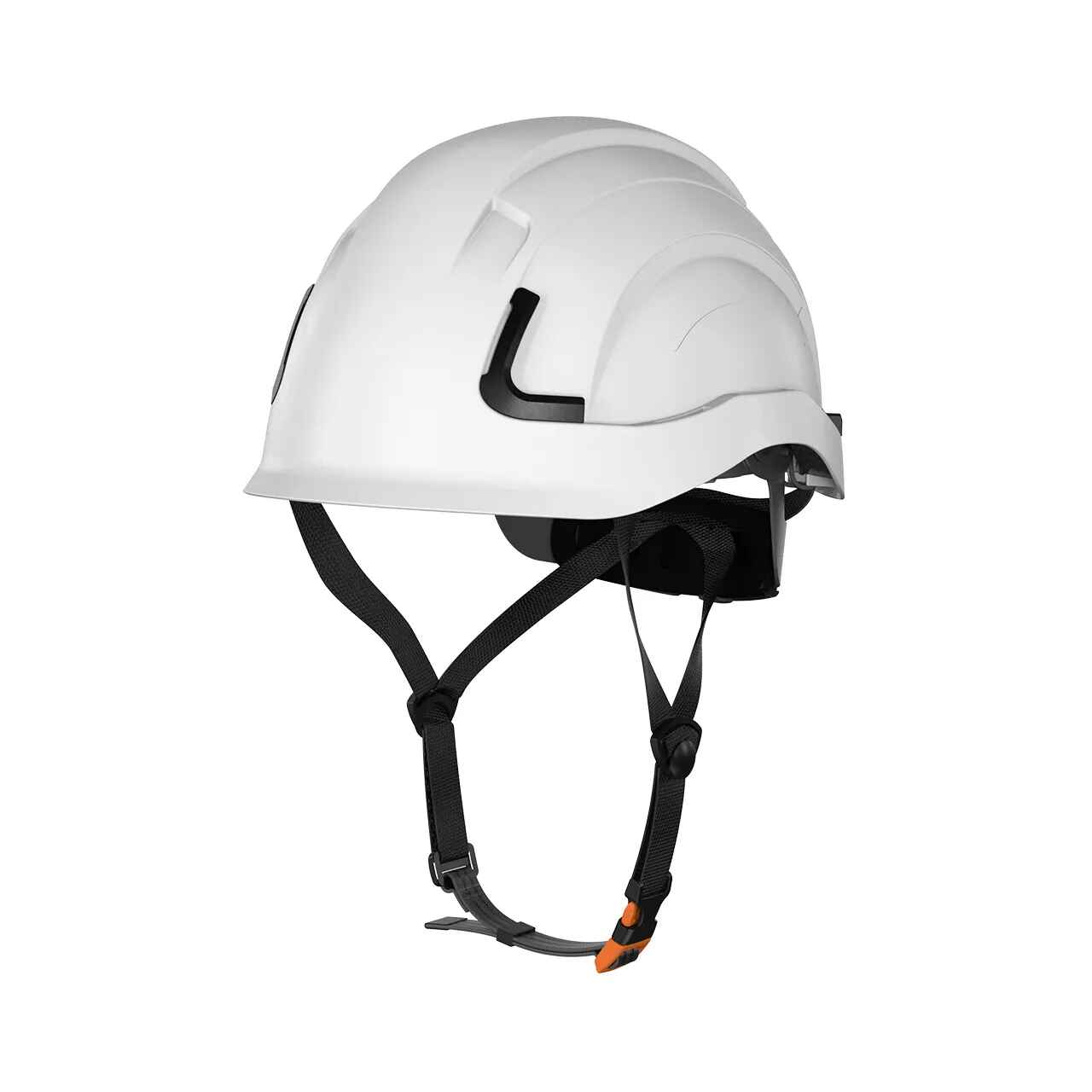
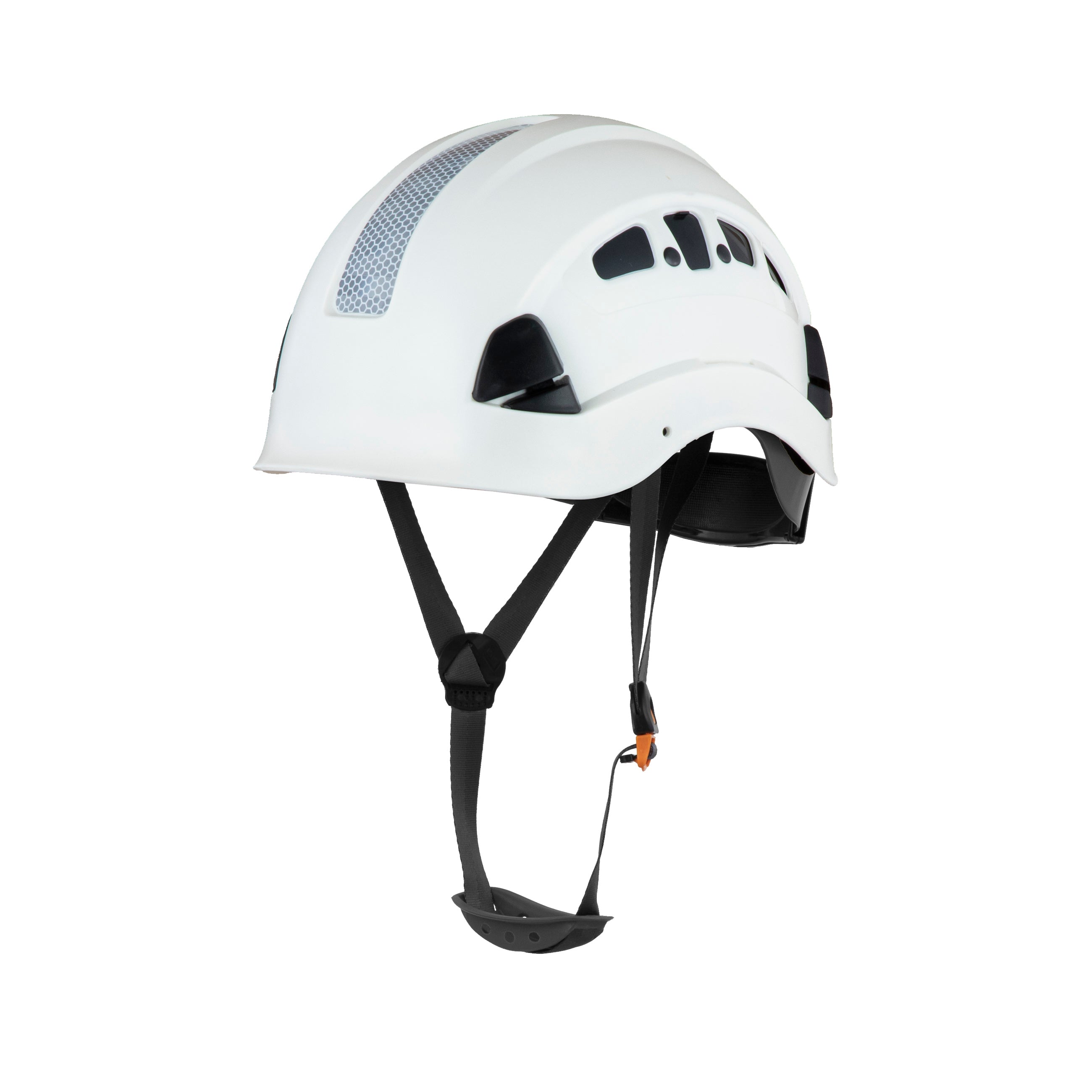
Type I helmets protect against impacts to the top of the head only. Type II helmets protect against impacts to the top, sides, front, and back. Since only about 15% of head impacts on jobsites hit the crown, Type II helmets cover the vast majority of real-world hazards. Defender Safety offers both: the H1 series (Type I) and the H2 series (Type II). For most jobsite applications, especially where fall hazards exist, Type II is the recommended choice.
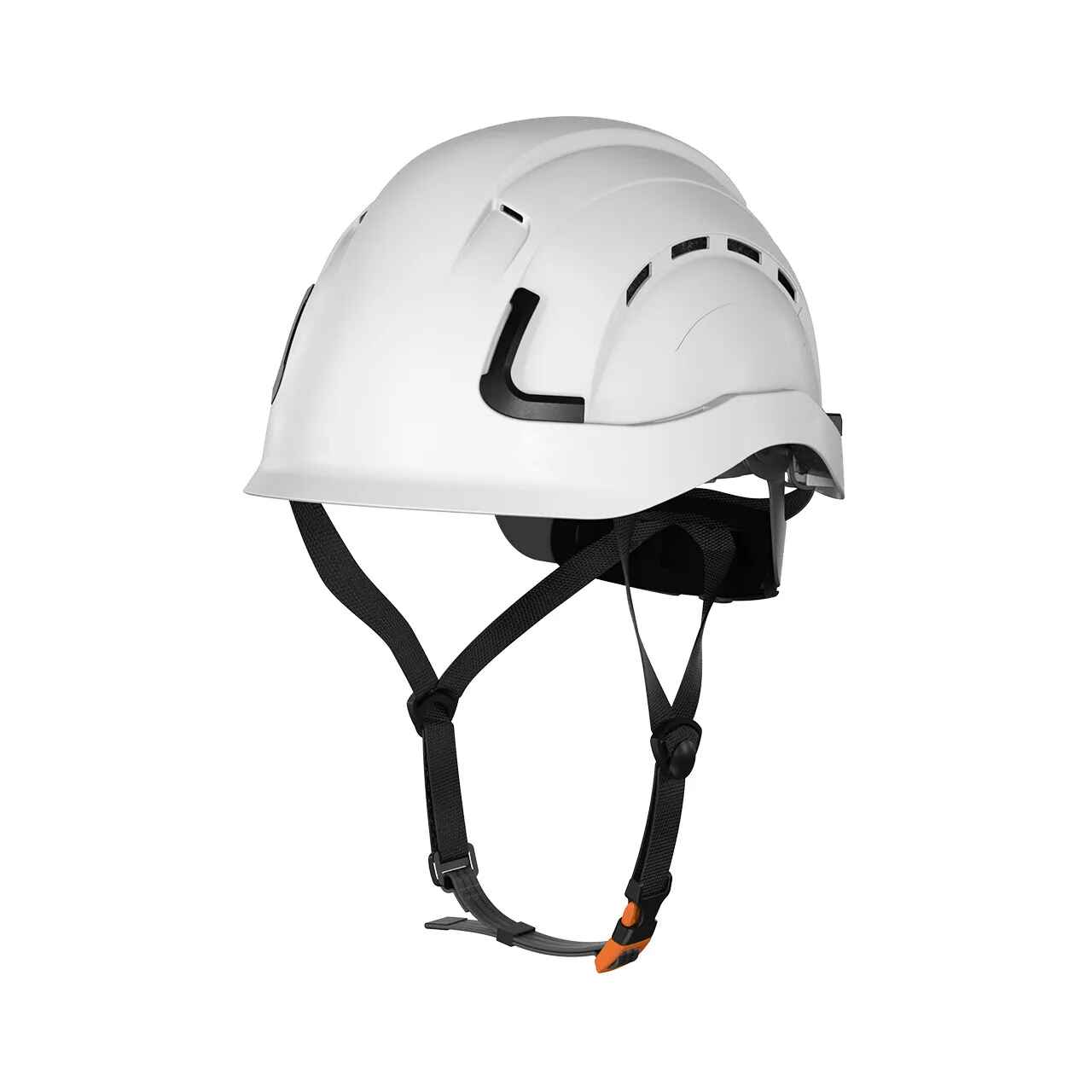
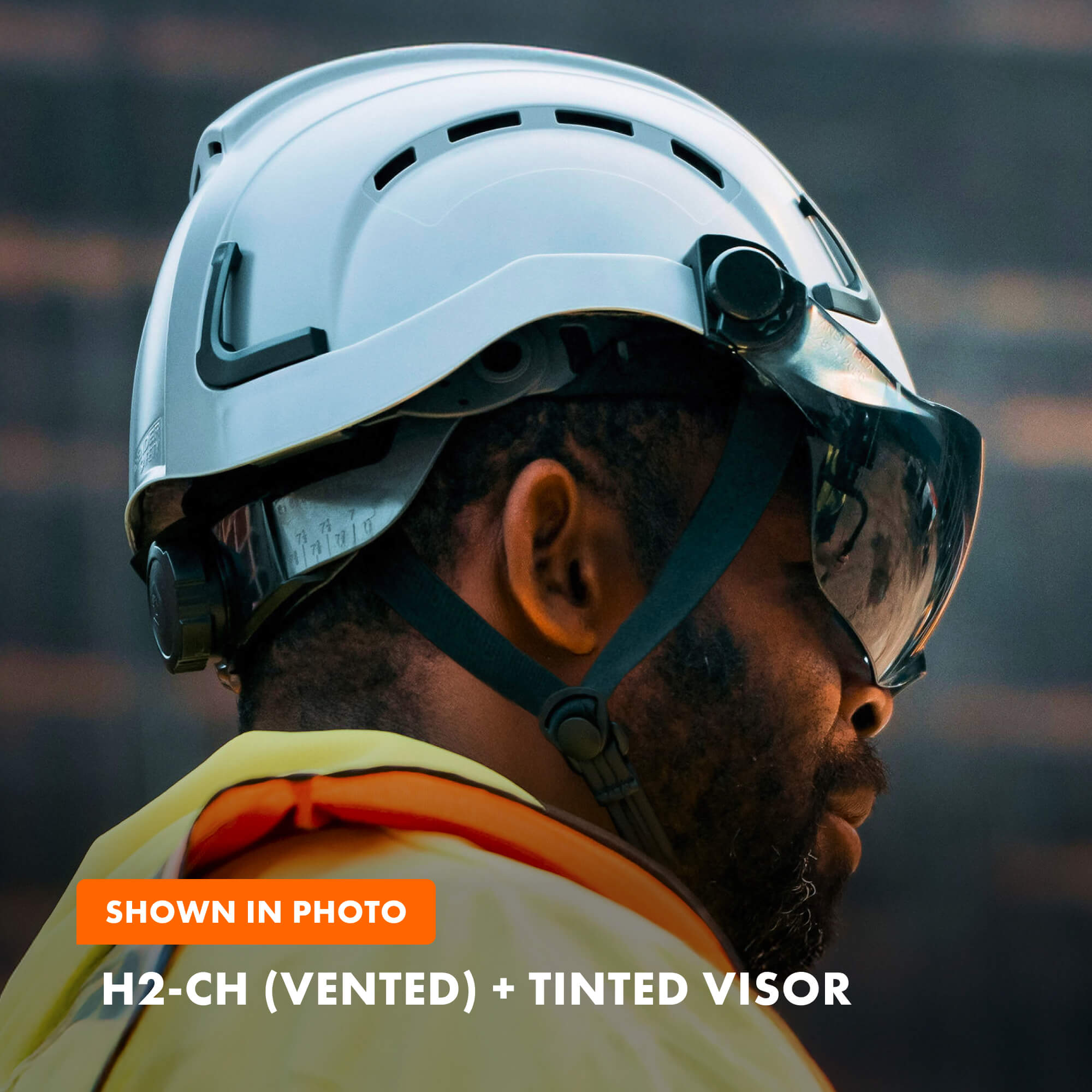
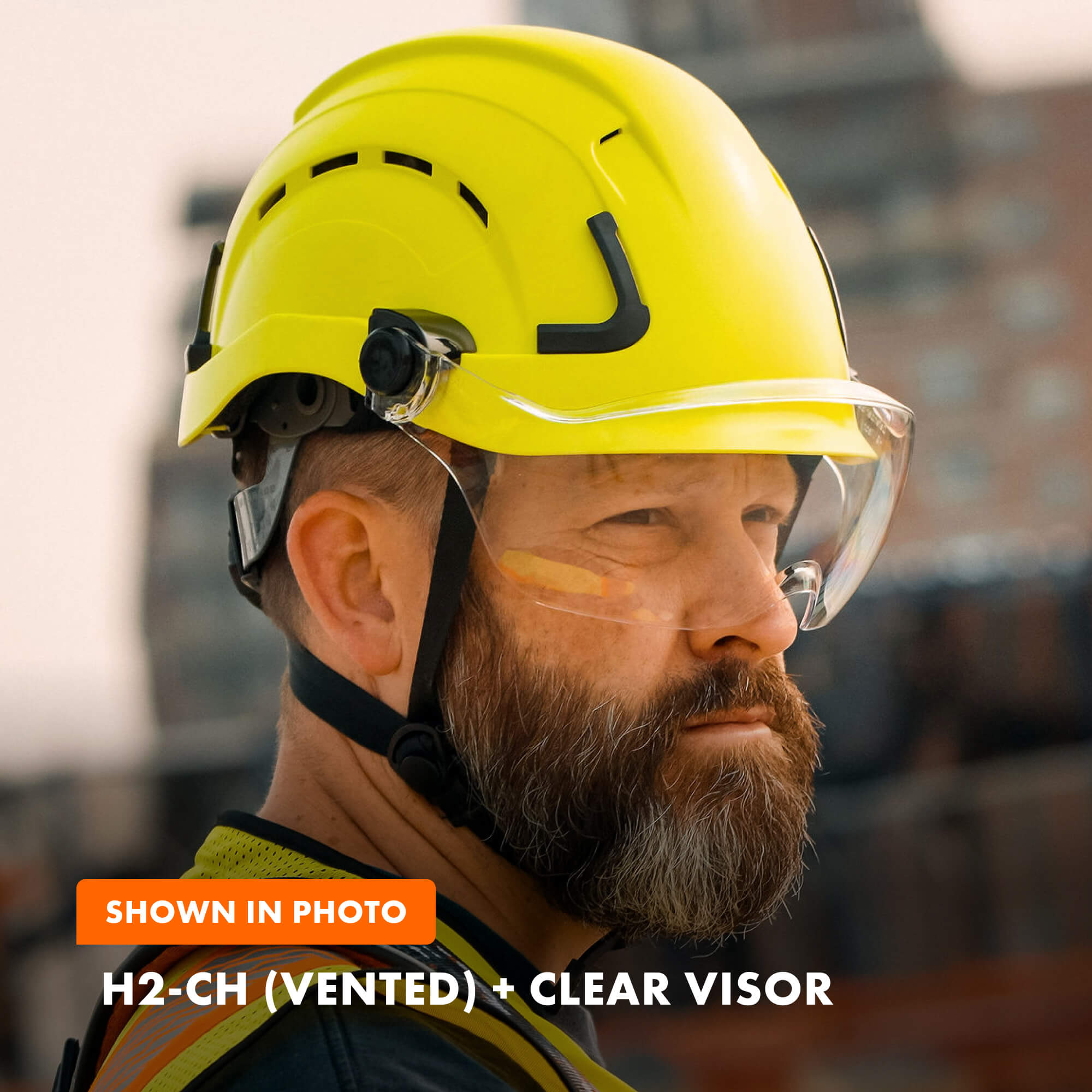
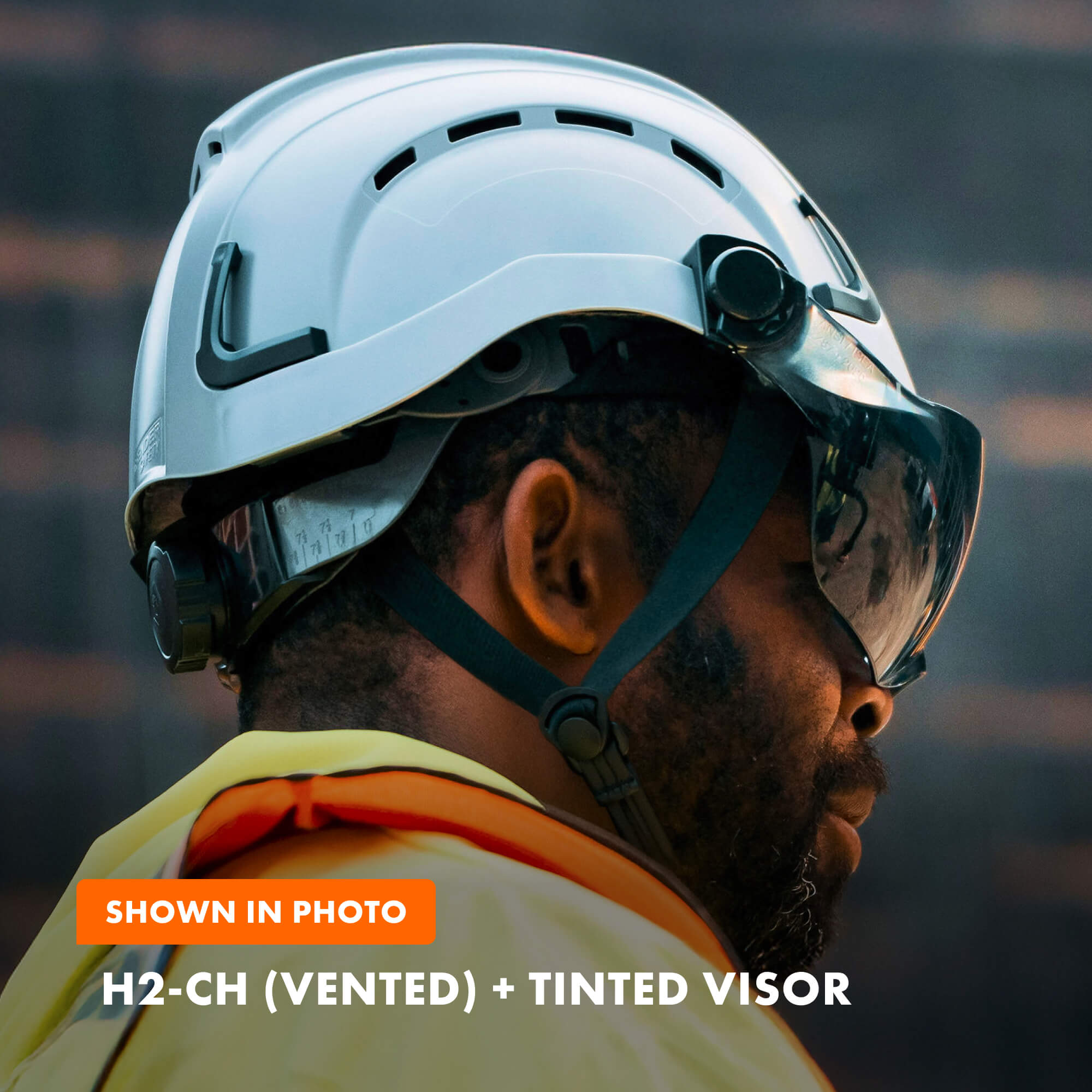
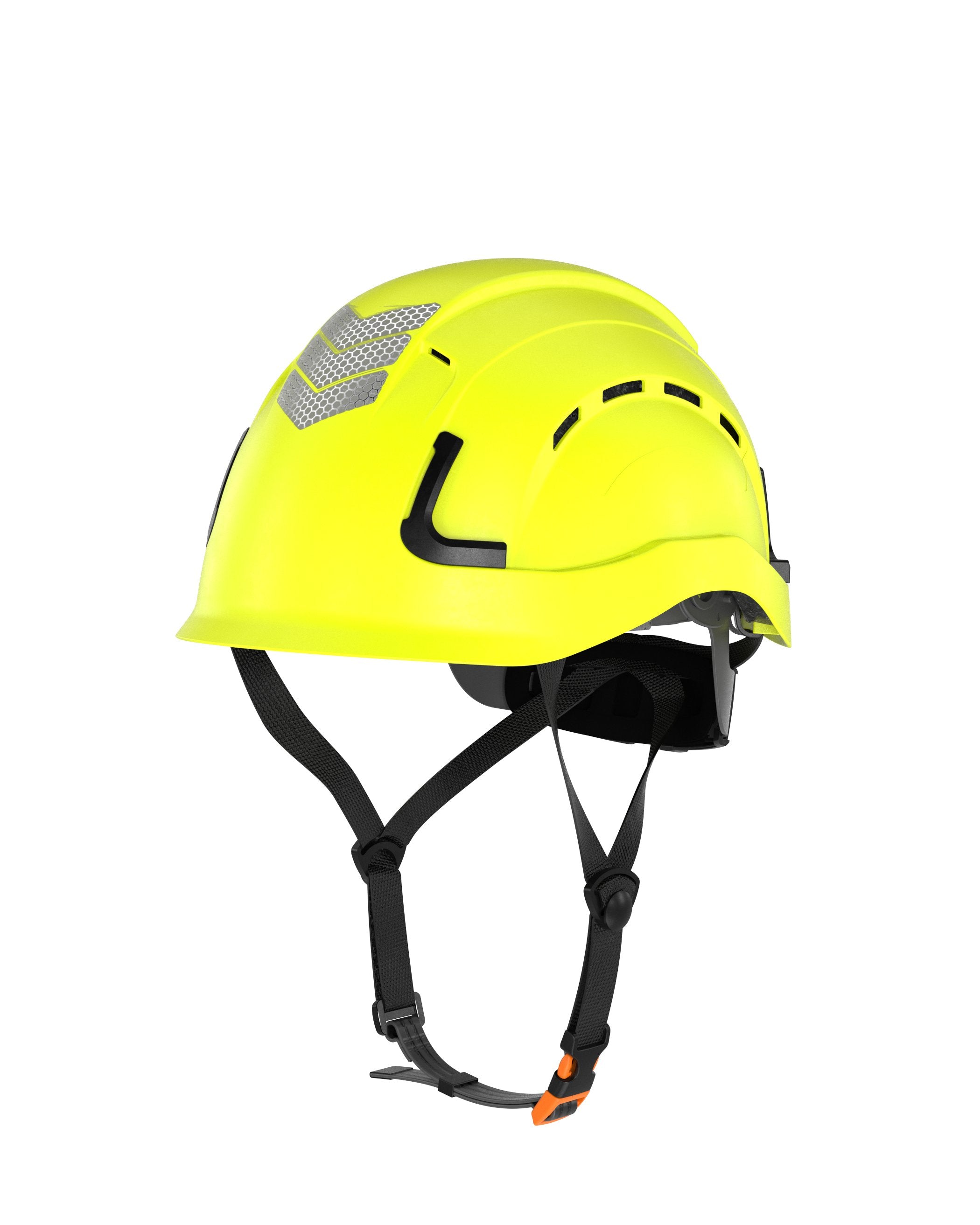
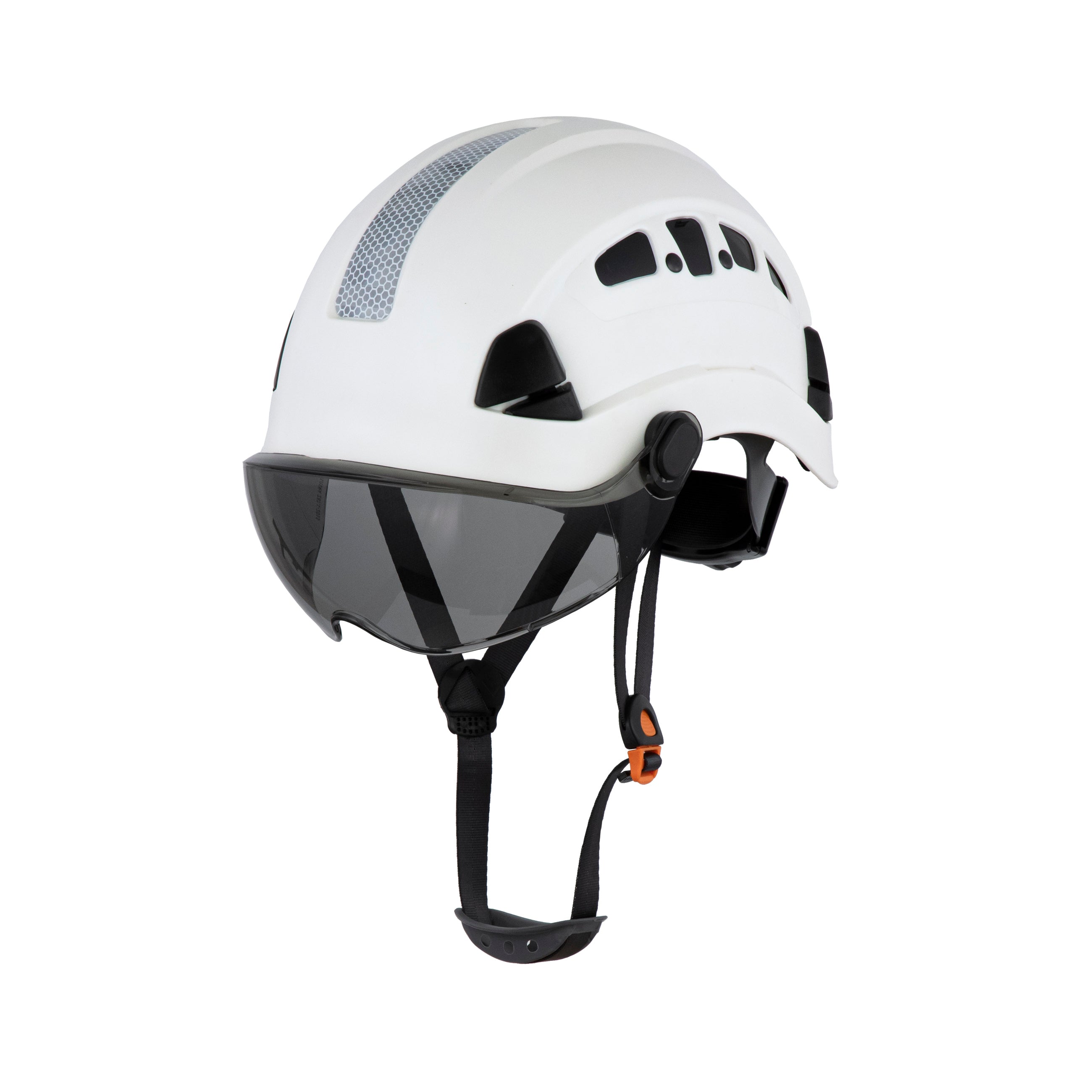
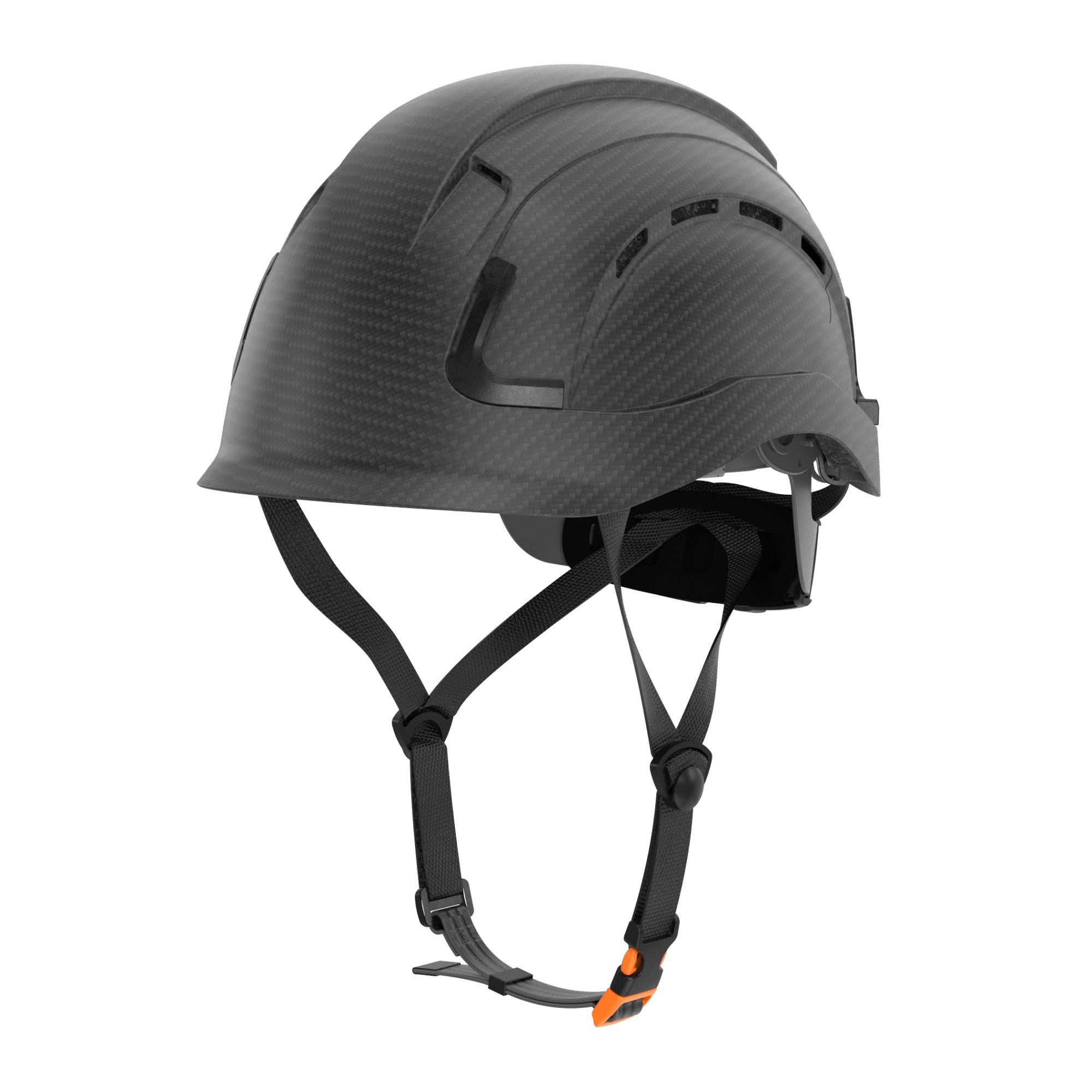
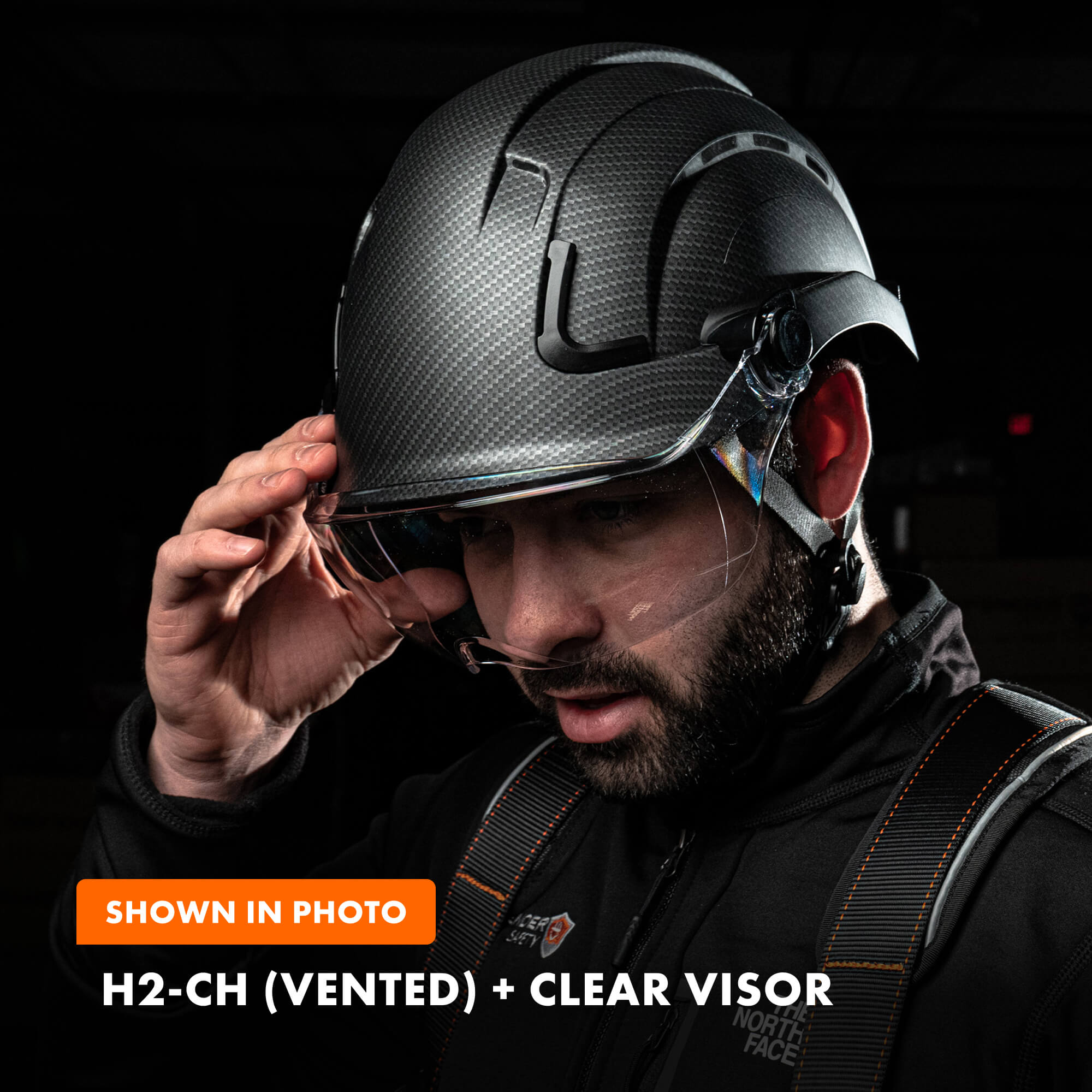
A vented safety helmet has openings in the shell that allow airflow to keep your head cool during hot weather or physically demanding work. Vented helmets are classified as Class C, meaning they provide no electrical protection. If you work around electrical hazards, you need a non-vented Class E helmet. If electrical exposure is not a concern, vented helmets are the more comfortable option. Defender Safety's H1-CH and H2-CH models are vented Class C helmets.
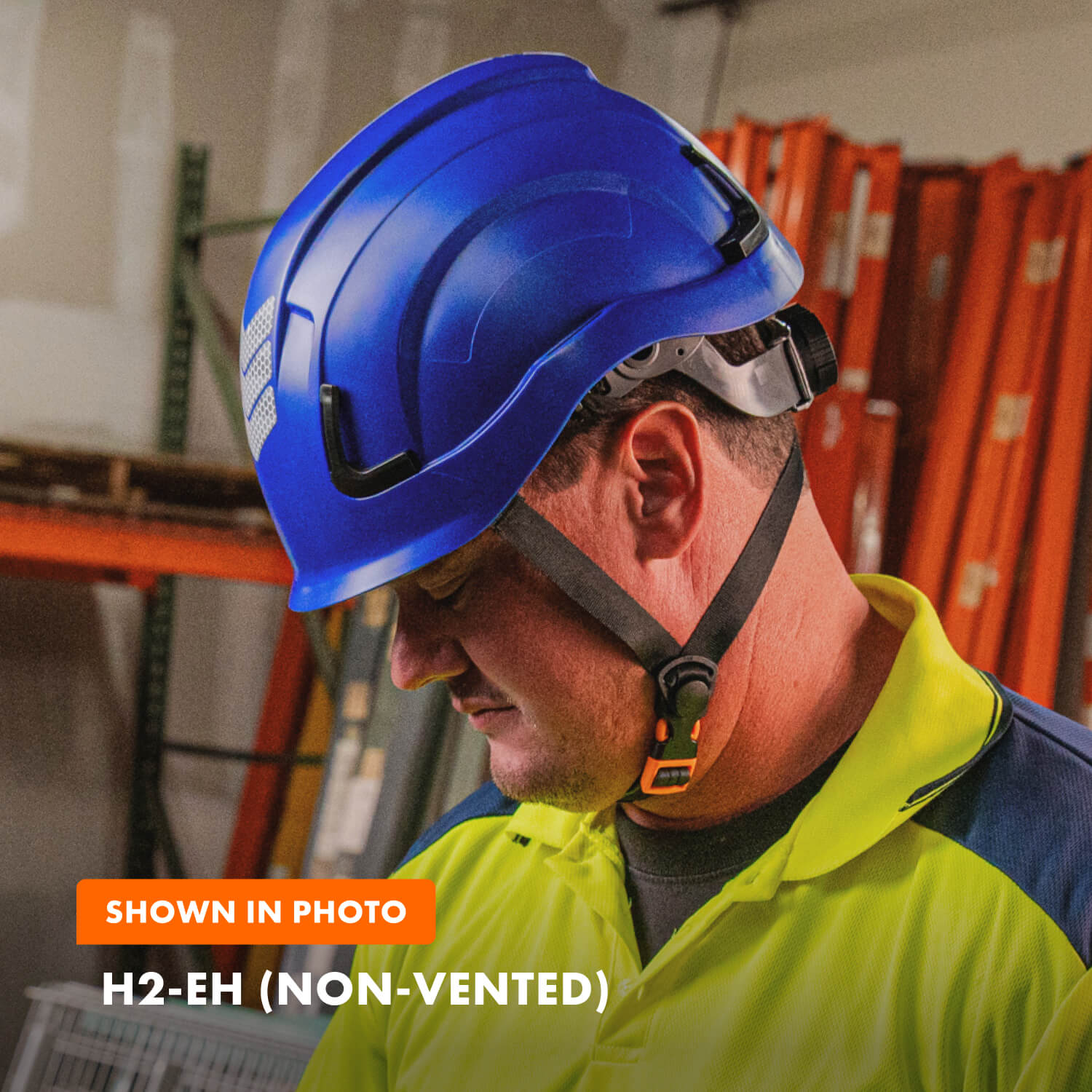
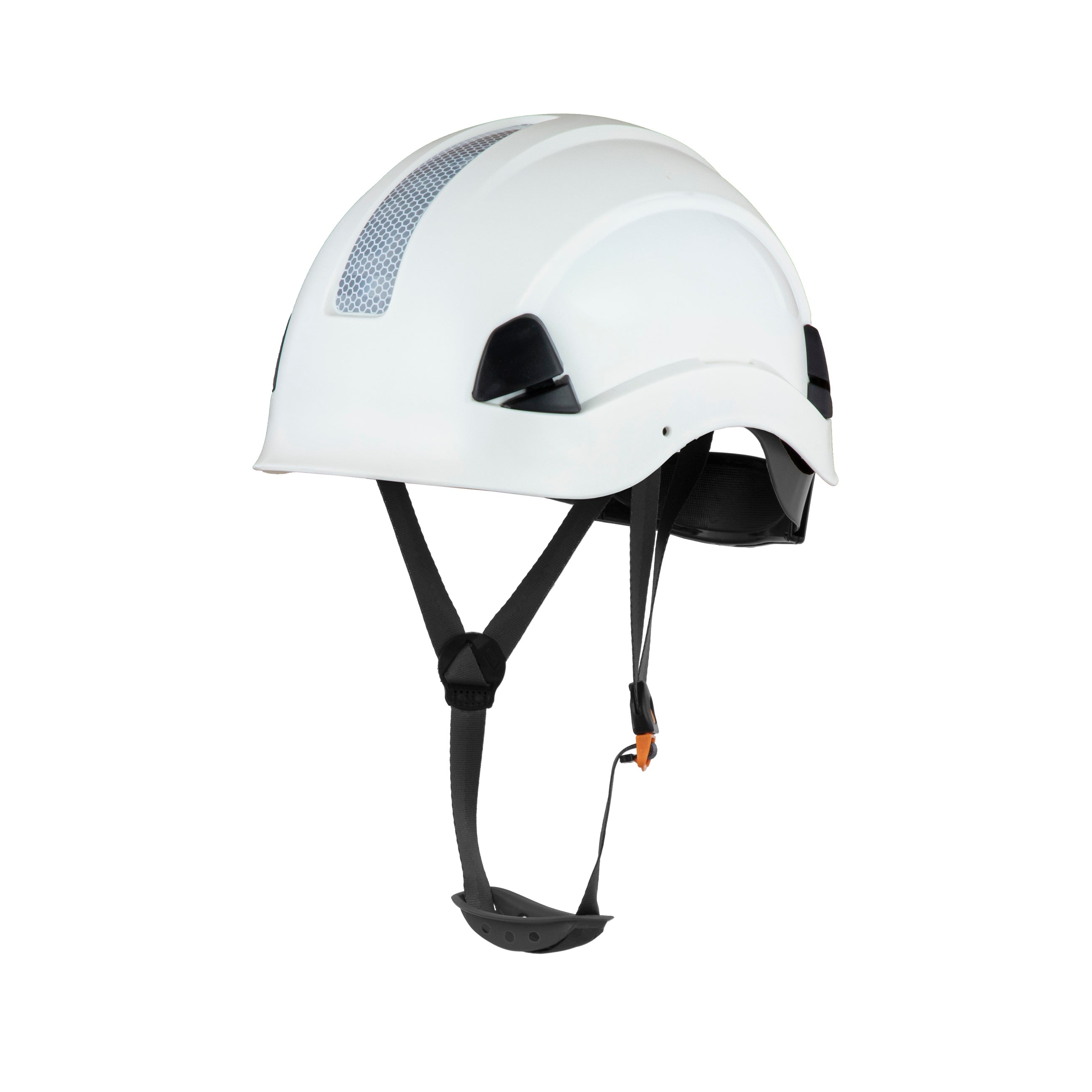
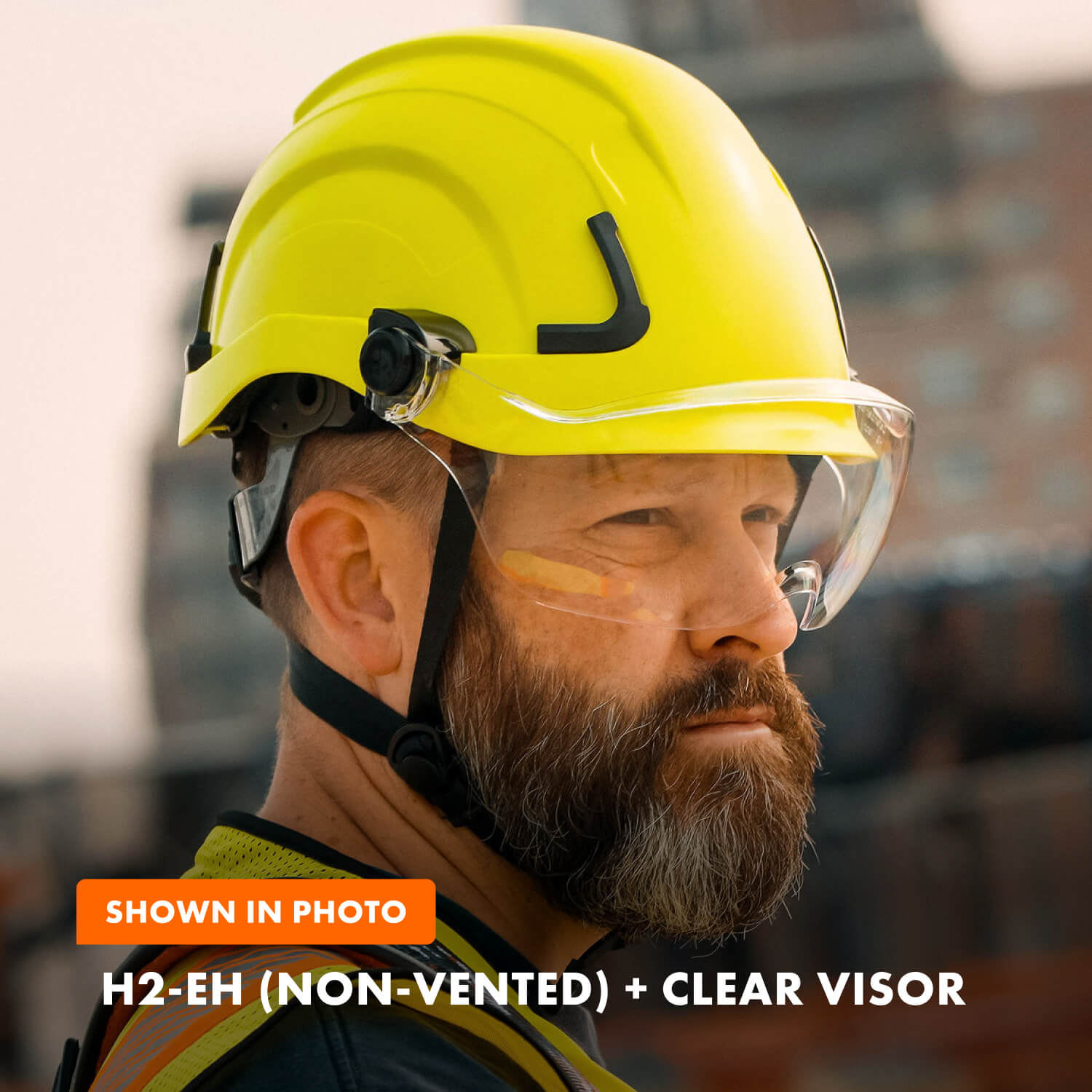
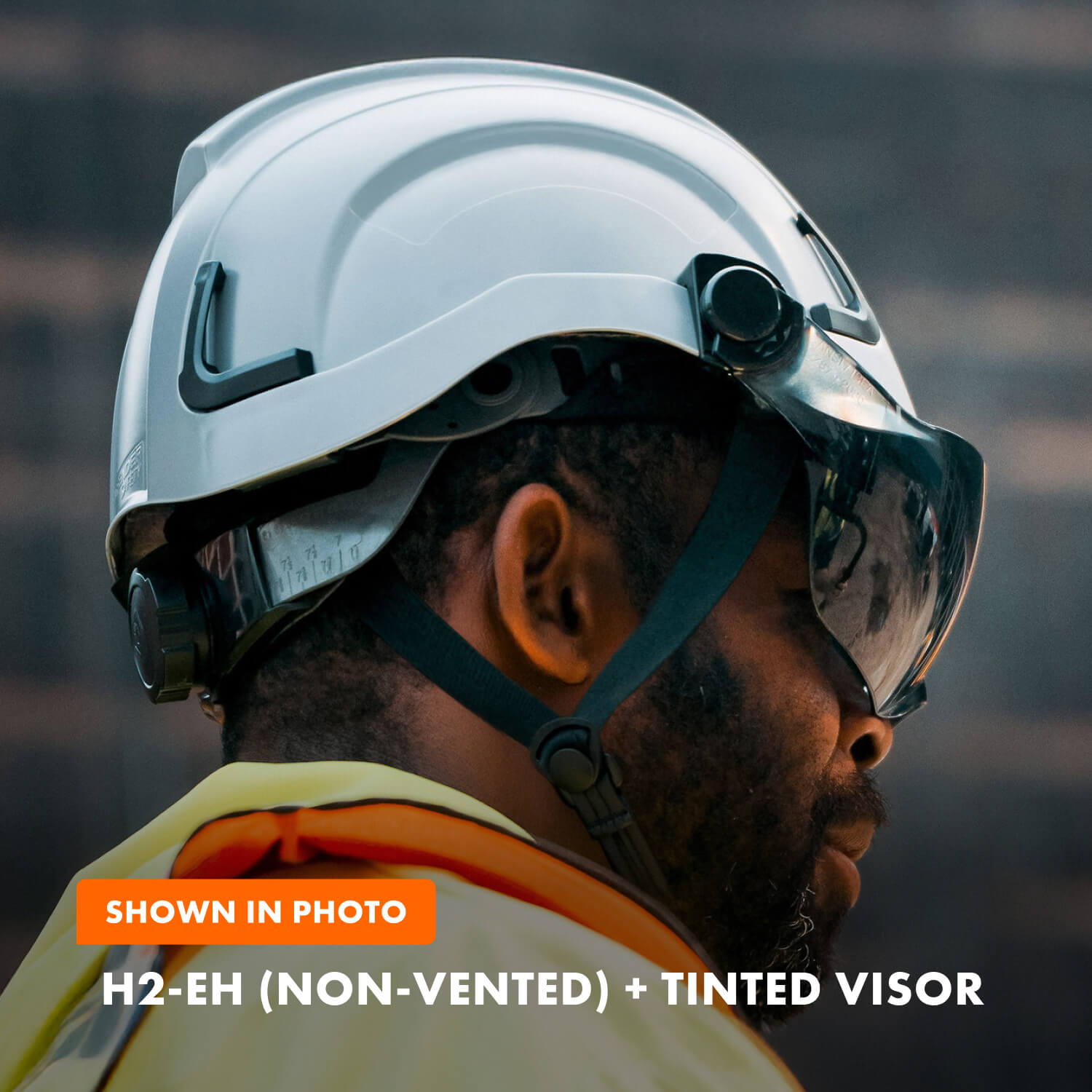
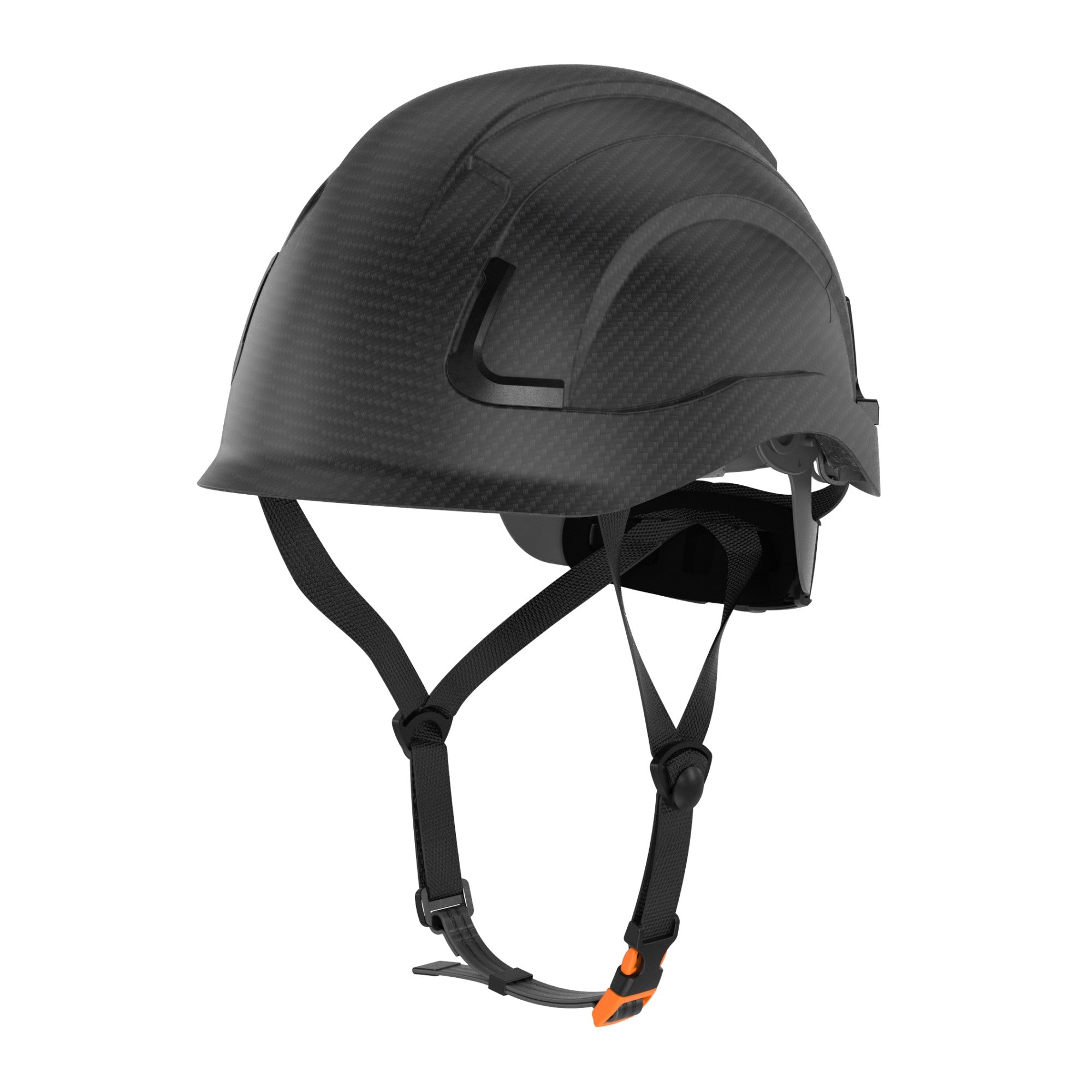
A non-vented safety helmet has a solid shell with no ventilation openings. This design is required for Class E (electrical) protection, rated up to 20,000 volts. Non-vented helmets are mandatory for electrical work, utility work, and any environment where contact with electrical conductors is possible. Defender Safety's H1-EH and H2-EH models are non-vented Class E helmets.
Yes. Defender Safety helmets are independently tested by certified third-party laboratories to meet ANSI/ISEA Z89.1 and applicable EN standards. Third-party testing means the helmets are evaluated by an unbiased organization—not the manufacturer—ensuring that all impact resistance, electrical protection, and performance claims are verified under real-world testing conditions.
The benefit is simple: confidence and compliance. You’re not just taking a brand’s word for it—you’re relying on proven, standardized testing that meets OSHA requirements and industry benchmarks. This gives safety managers peace of mind, helps companies stay compliant, and ensures workers are wearing protection that performs when it matters most.
OSHA requires head protection whenever employees are exposed to potential head injury from impact, falling or flying objects, or electrical shock and burns. This applies across industries: construction (29 CFR 1926.100), general industry (29 CFR 1910.135), and maritime. Common situations include construction and demolition, working below other workers or overhead hazards, near hoisting operations, and around energized electrical equipment. If there is any risk of something hitting your head, head protection is required.
CLASSES + STANDARDS
Helmet classes define electrical protection levels. Class C (Conductive) provides no electrical protection -- these helmets can be vented and are used where electrical hazards are not present. Class E (Electrical) provides dielectric protection up to 20,000 volts (phase to ground) -- these helmets must be non-vented. Class G (General) provides low-voltage protection up to 2,200 volts. Defender Safety offers Class C (vented) and Class E (non-vented) options across both the H1 and H2 product lines.
ANSI/ISEA Z89.1 is the American National Standard for Industrial Head Protection. It sets testing requirements for impact resistance, penetration resistance, and electrical insulation. The standard defines helmet types (I and II) and classes (C, E, G). OSHA requires that all head protection used on jobsites comply with ANSI/ISEA Z89.1-2009, Z89.1-2014, or later. All Defender Safety helmets meet ANSI Z89.1-2014.
EN 12492 is the European standard for helmets used in mountaineering, climbing, and work at height. It requires chin strap retention, multi-directional impact testing, and ventilation. EN 12492 helmets provide additional top impact protection compared to ANSI Type I hard hats, but the standard is not equivalent to ANSI Type II -- it does not provide the same lateral protection. Defender Safety helmets that carry EN 12492 certification are tested for climbing and work-at-height applications in addition to ANSI compliance.
EN 397 is the European standard for industrial safety helmets. It covers protection against falling objects and is the baseline standard in Europe, similar to ANSI Z89.1 in the United States. EN 397 helmets protect primarily against top-of-head impacts. Some Defender Safety models carry EN 397 certification for use in European markets and on jobsites that require compliance with European standards.
ANSI Z89.1 is a U.S. industrial standard covering head protection for construction, manufacturing, and general industry. EN 12492 is a European standard specifically for climbing and work-at-height helmets. Key differences: ANSI Z89.1 includes electrical protection classes; EN 12492 does not. EN 12492 requires a chin strap; ANSI Z89.1 does not. EN 12492 requires ventilation; ANSI Z89.1 does not. EN 12492 requires higher chin strap retention force. ANSI Z89.1 is required by OSHA; EN 12492 is not required in the U.S. but is accepted. Defender Safety helmets that carry both certifications give you compliance across standards.
OSHA does not "approve" specific helmets. Instead, OSHA requires that head protection meets the applicable ANSI/ISEA Z89.1 standard. If a helmet is tested and certified to ANSI Z89.1-2009 or later, it satisfies OSHA requirements. Defender Safety helmets are ANSI Z89.1-2014 compliant, meeting current OSHA head protection standards for both general industry (29 CFR 1910.135) and construction (29 CFR 1926.100).
As of 2026, OSHA has not issued a blanket mandate requiring safety helmets over traditional hard hats. However, OSHA published a Safety and Health Information Bulletin in 2023 strongly recommending safety helmets, and OSHA now requires all of its own staff to wear them on jobsites. Many general contractors and large construction firms have already made the switch voluntarily. The effective January 2025 PPE fit requirement (equipment must fit each worker properly) further pushes the industry toward helmets with adjustable suspension and chin straps.
Virginia Tech's Helmet Lab developed the STAR (Summation of Tests for the Analysis of Risk) rating system for construction helmets. Helmets are tested across a range of oblique fall scenarios that simulate real jobsite accidents. Each helmet receives a score -- lower scores mean better protection. Helmets are then rated 1 to 5 stars, with 5 stars being the best. Their research found that Type II helmets reduce concussion risk by 34% and skull fracture risk by 65% on average compared to Type I hard hats.
CHOOSING THE RIGHT HELMET
Start with three questions. (1) What hazards are present? If there are electrical hazards, you need a non-vented Class E helmet. If not, a vented Class C gives better airflow. (2) What type of impacts are likely? If workers face fall risks or lateral impact hazards, choose Type II. For top-impact-only environments, Type I is acceptable. (3) What accessories do you need? Visors, face shields, earmuffs, and headlamps all need to be compatible with the helmet. Defender Safety's H2-CH (Type II, vented) is the most versatile option for general construction. The H2-EH (Type II, non-vented) is the go-to for electrical environments.
You need a non-vented Class E helmet. Class E provides dielectric protection up to 20,000 volts (phase to ground). Vented helmets cannot be used for electrical work because the ventilation openings compromise the shell's electrical insulation. Defender Safety's H1-EH (Type I, Class E) and H2-EH (Type II, Class E) are both rated for electrical environments.
For general construction, a Type II Class C (vented) safety helmet gives you the best combination of impact protection and comfort. Type II covers top and lateral impacts -- critical on construction sites where falls, swinging loads, and struck-by hazards come from all angles. Vented (Class C) keeps you cool during long shifts. If your site has electrical hazards, switch to a Type II Class E (non-vented). Defender Safety's H2-CH is the top pick for general construction; the H2-EH for sites with electrical exposure.
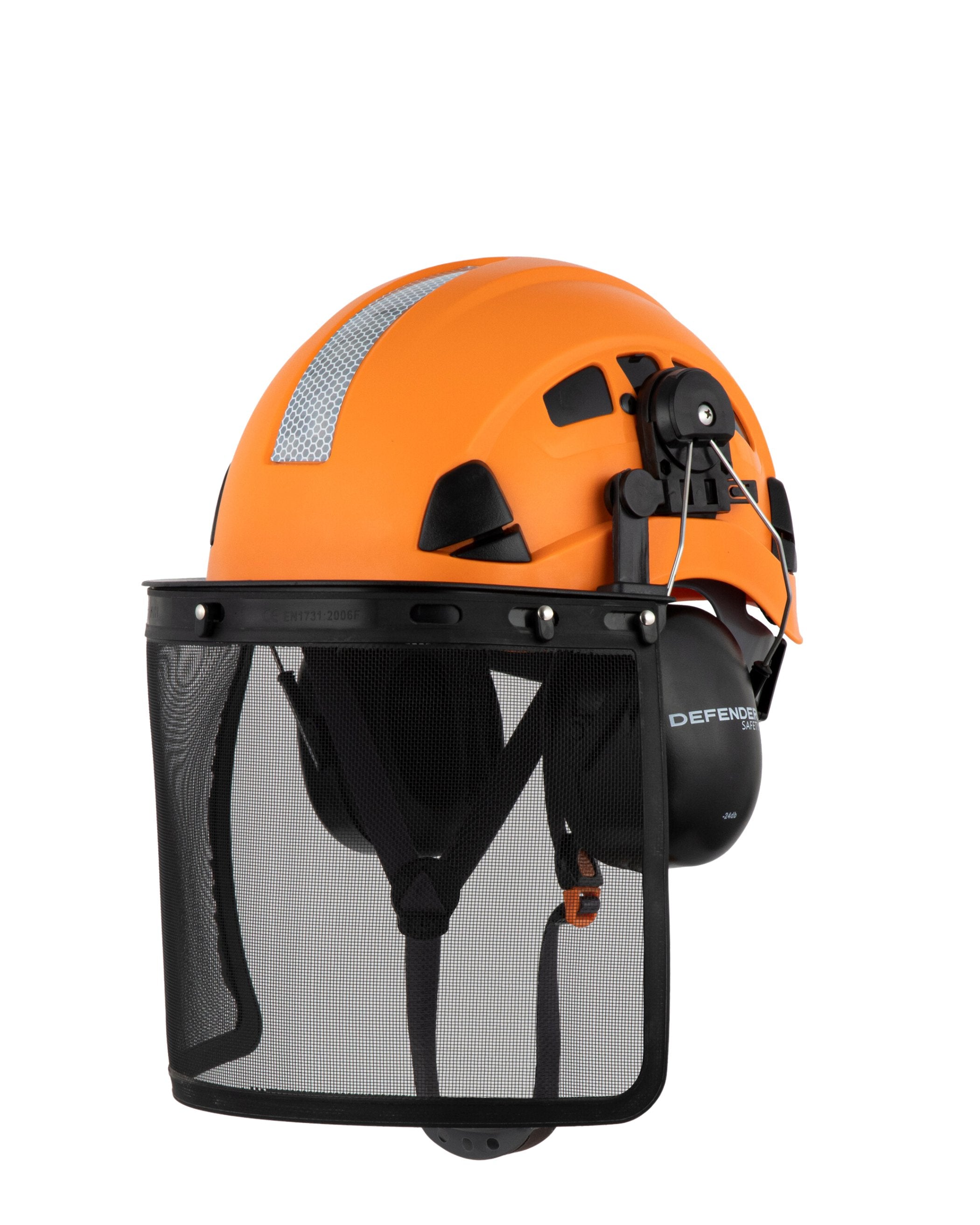
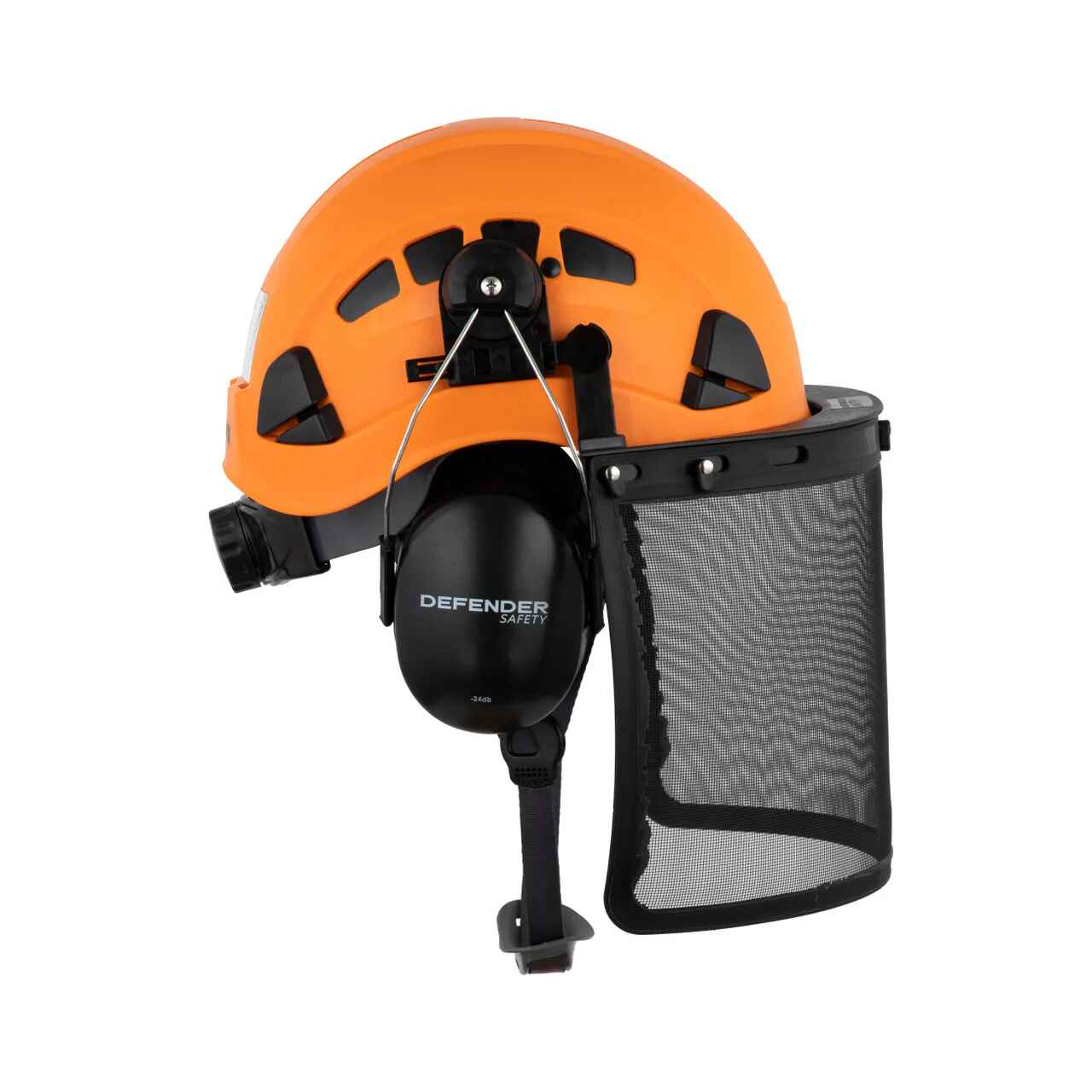
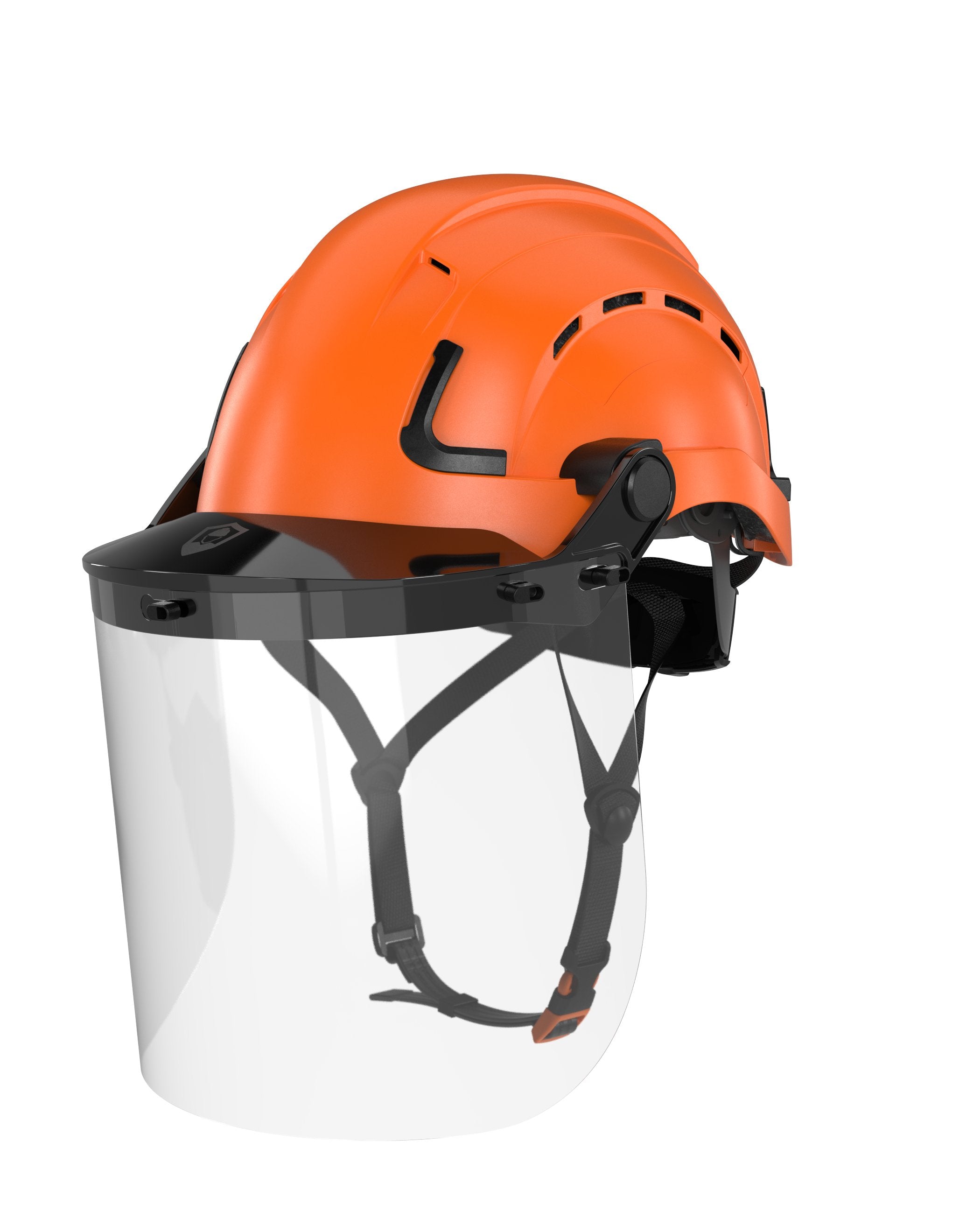
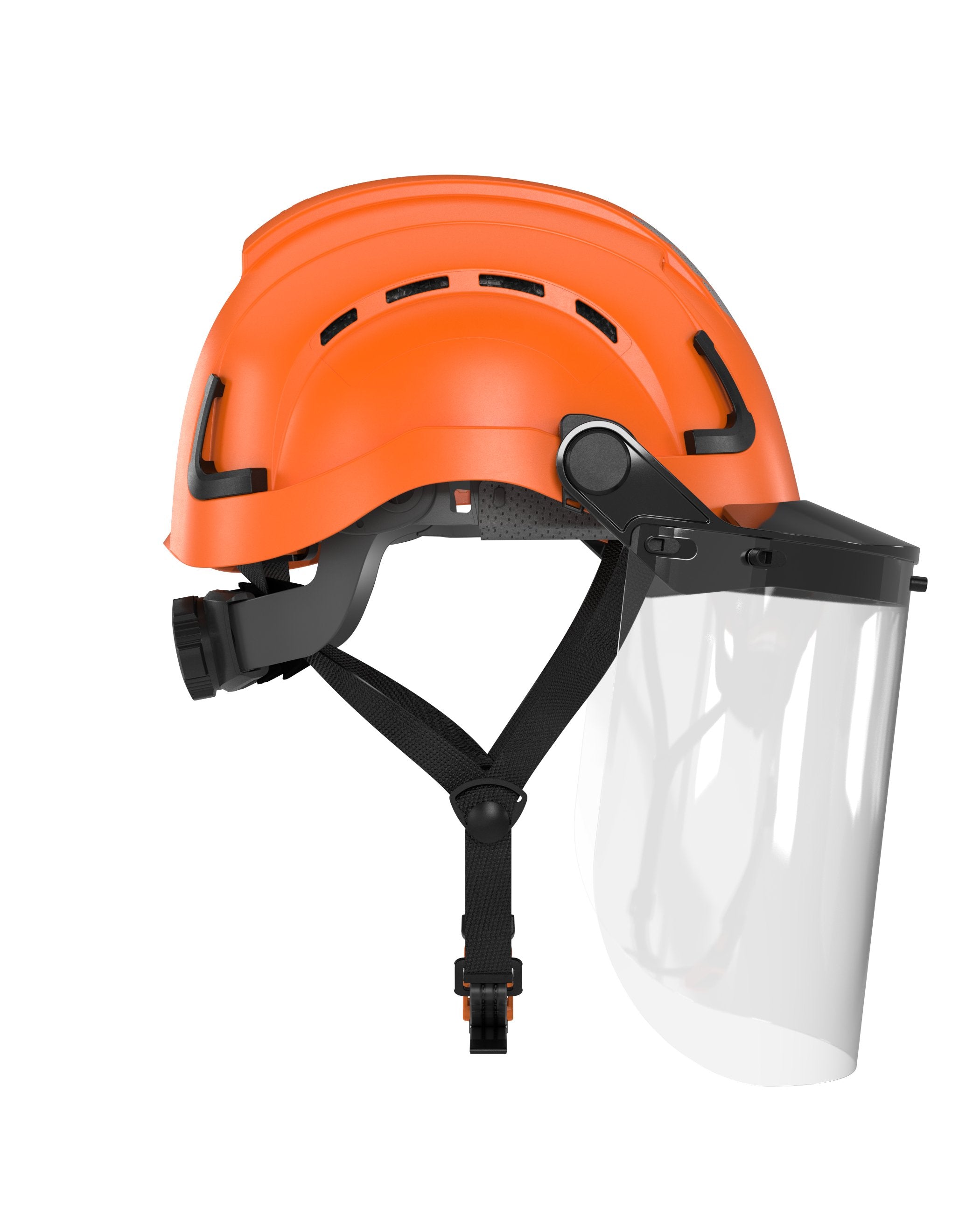
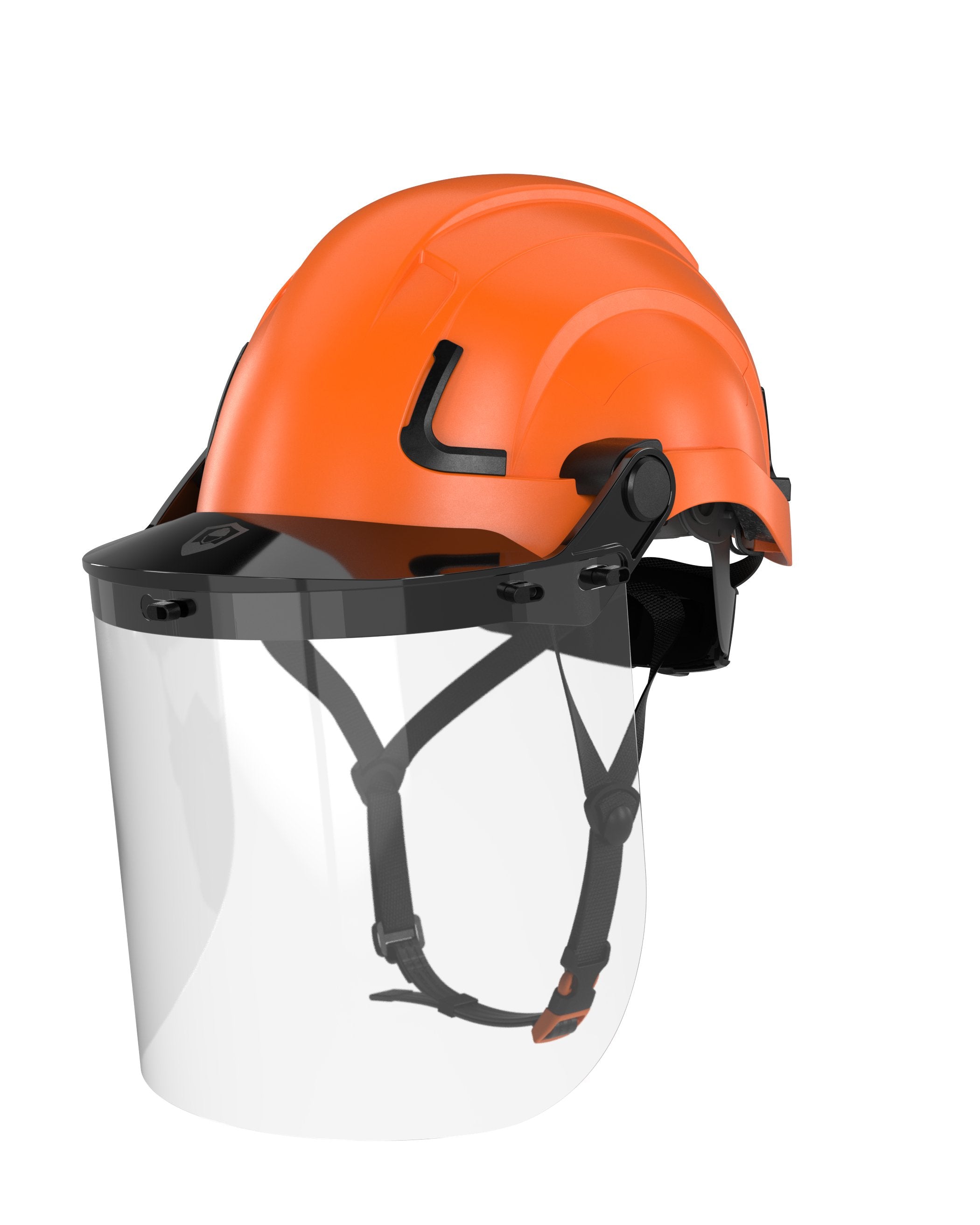
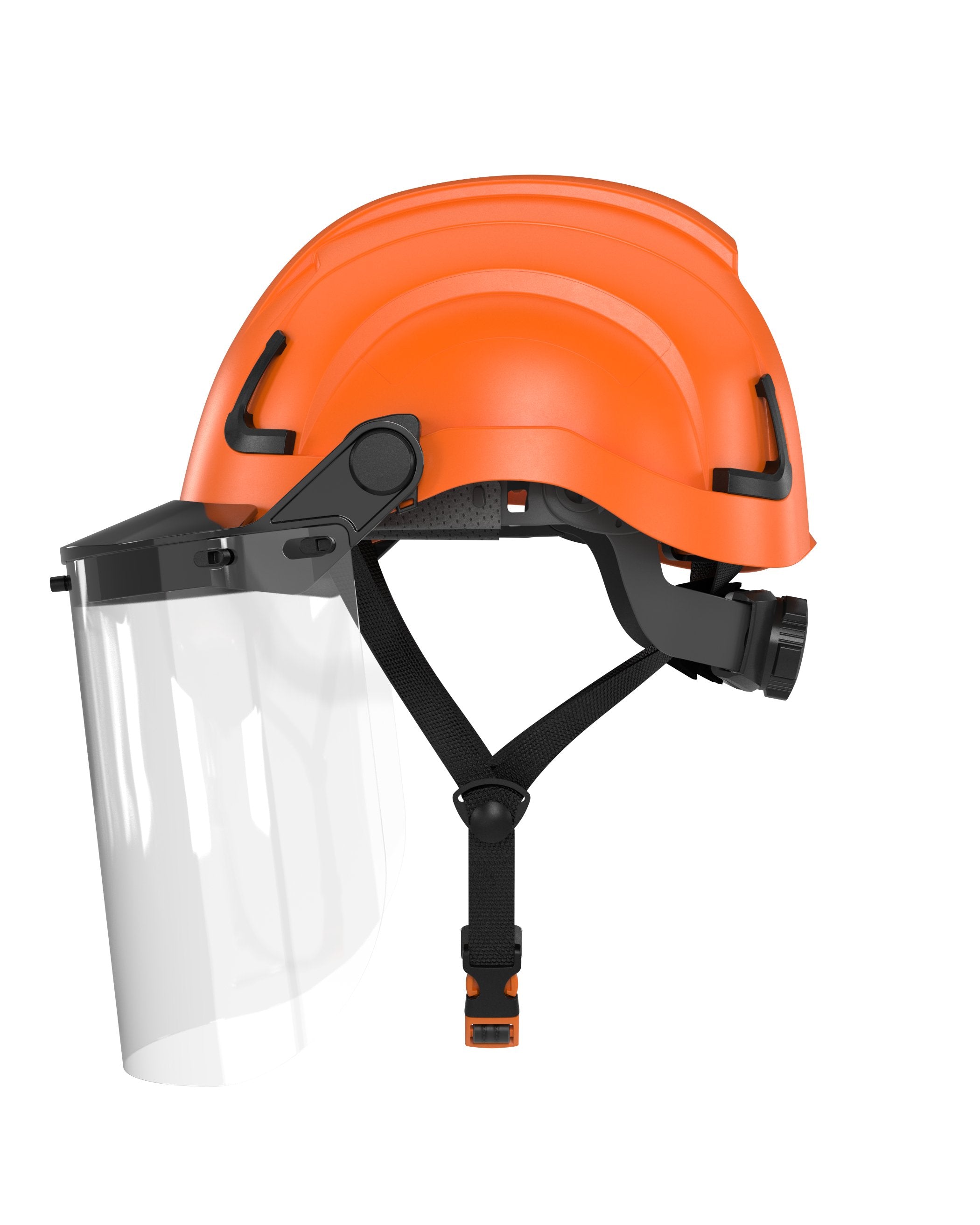
Arborists need a helmet certified for work at height with a secure chin strap, ventilation for physical activity, and compatibility with face mesh and hearing protection. EN 12492 certification is the standard for climbing helmets. Defender Safety's H1-CH Arborist Helmet is designed specifically for tree work, with EN 12492 compliance, integrated chin strap, and slots for visor and earmuff accessories.
Any industry where workers face head injury hazards. Common industries include construction and demolition, electrical and utilities, oil and gas, manufacturing, mining, forestry and arboriculture, telecommunications, shipbuilding and maritime, and warehousing with overhead operations. The specific type and class of helmet depends on the hazards present at each worksite.
Use a Type II helmet whenever workers face fall hazards, lateral impact risks, or work in awkward positions where a side impact is possible. This includes construction, roofing, steel erection, scaffolding, oil and gas, confined spaces, and work at height. Type I helmets are appropriate for environments where only top-of-head impact protection is needed and fall risks are minimal. The industry trend -- backed by OSHA and Virginia Tech data -- strongly favors Type II.
FEATURES, ACCESSORIES + CUSTOMIZATION
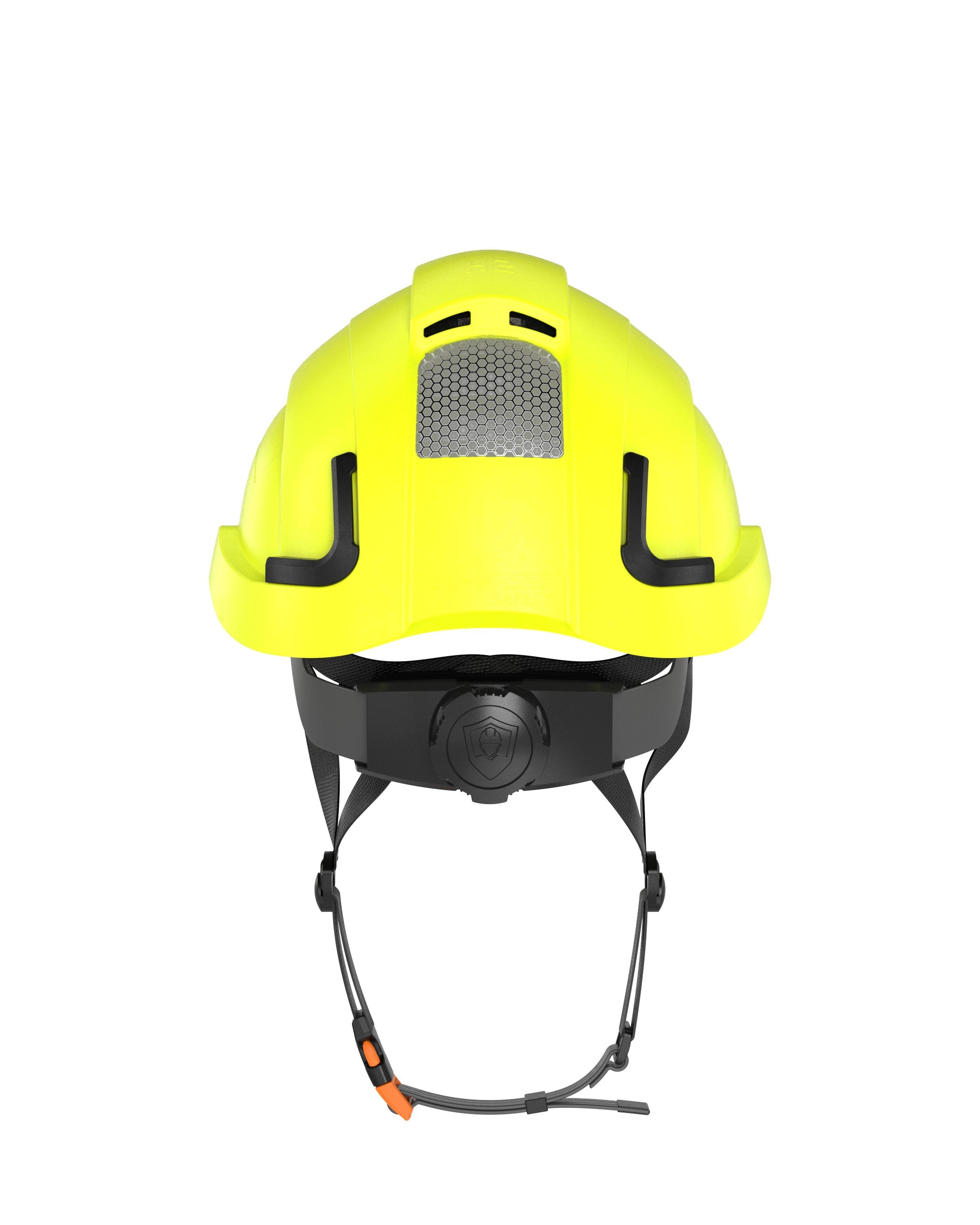
A 6-point suspension system uses six connection straps inside the helmet to distribute impact force across a wider area of your head. Compared to 4-point systems, 6-point suspensions offer better shock absorption, more even weight distribution, and greater comfort during all-day wear. All Defender Safety helmets use a 6-point suspension with ratchet adjustment for a secure, customizable fit.
Turn the ratchet knob at the back of the helmet to tighten or loosen the suspension until the helmet sits snugly on your head without pressure points. The helmet should sit level and low on your forehead -- about one to two finger widths above your eyebrows. Adjust the chin strap so it is snug under your chin. The helmet should not rock side to side or front to back. You should be able to adjust the ratchet with one hand, even while wearing gloves.
Modern safety helmets typically weigh between 350g and 550g (roughly 12 to 19 ounces). Defender Safety helmets are engineered to be lightweight for all-day comfort without sacrificing protection. The H1 series (Type I) is lighter than the H2 series (Type II) due to the difference in coverage area. Lightweight construction materials like high-density polyethylene and ABS plastic keep weight manageable even with full-coverage Type II designs.
Yes, if you pick the right one. Modern safety helmets are significantly more comfortable than traditional hard hats. Features that make the difference: ratchet-adjustable suspension systems for a personalized fit, moisture-wicking padding, vented shells for airflow (Class C models), and lightweight materials that reduce neck strain. The chin strap, which people worry about, actually improves comfort by keeping the helmet stable -- no more reaching up to hold your hat during overhead work or wind.
Yes. A chin strap is one of the key features that separates a safety helmet from a traditional hard hat. The chin strap keeps the helmet on your head during falls, slips, or sudden movements. OSHA specifically recommends chin straps for construction work, work at height, and any environment with slip, trip, or fall hazards. All Defender Safety helmets include an integrated chin strap with adjustable retention.
Yes, but use helmet-specific winter liners rather than bulky beanies, which can interfere with the suspension system and compromise fit. Helmet winter liners are designed to fit between the suspension and your head without affecting the helmet's protective performance. They provide insulation and wind protection while maintaining proper helmet fit. Look for liners compatible with your specific helmet model.
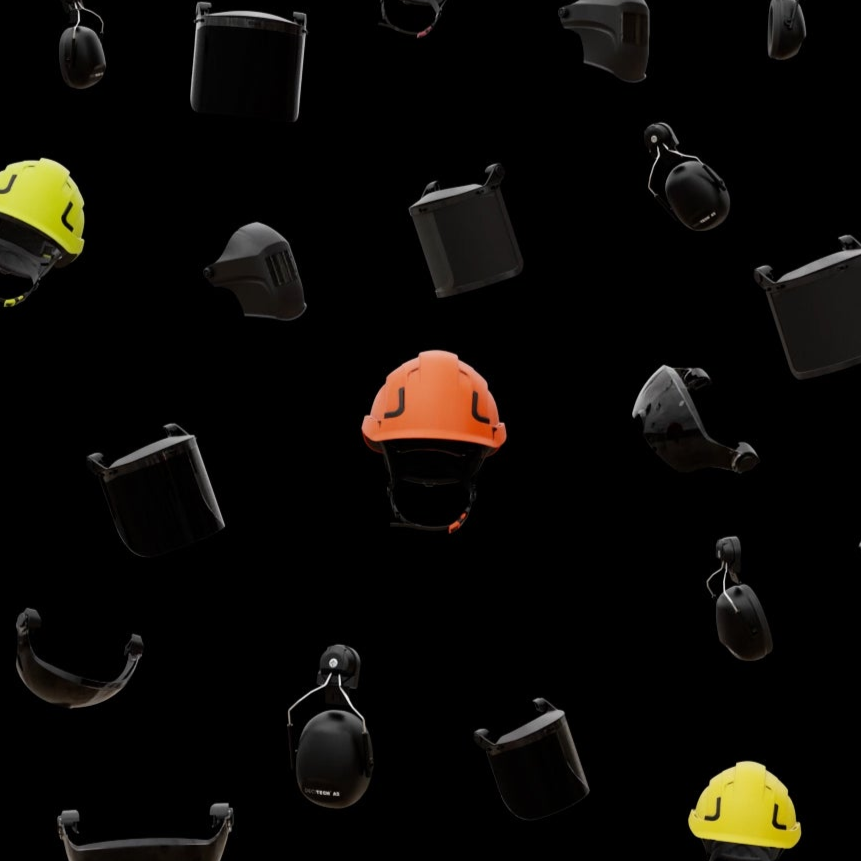
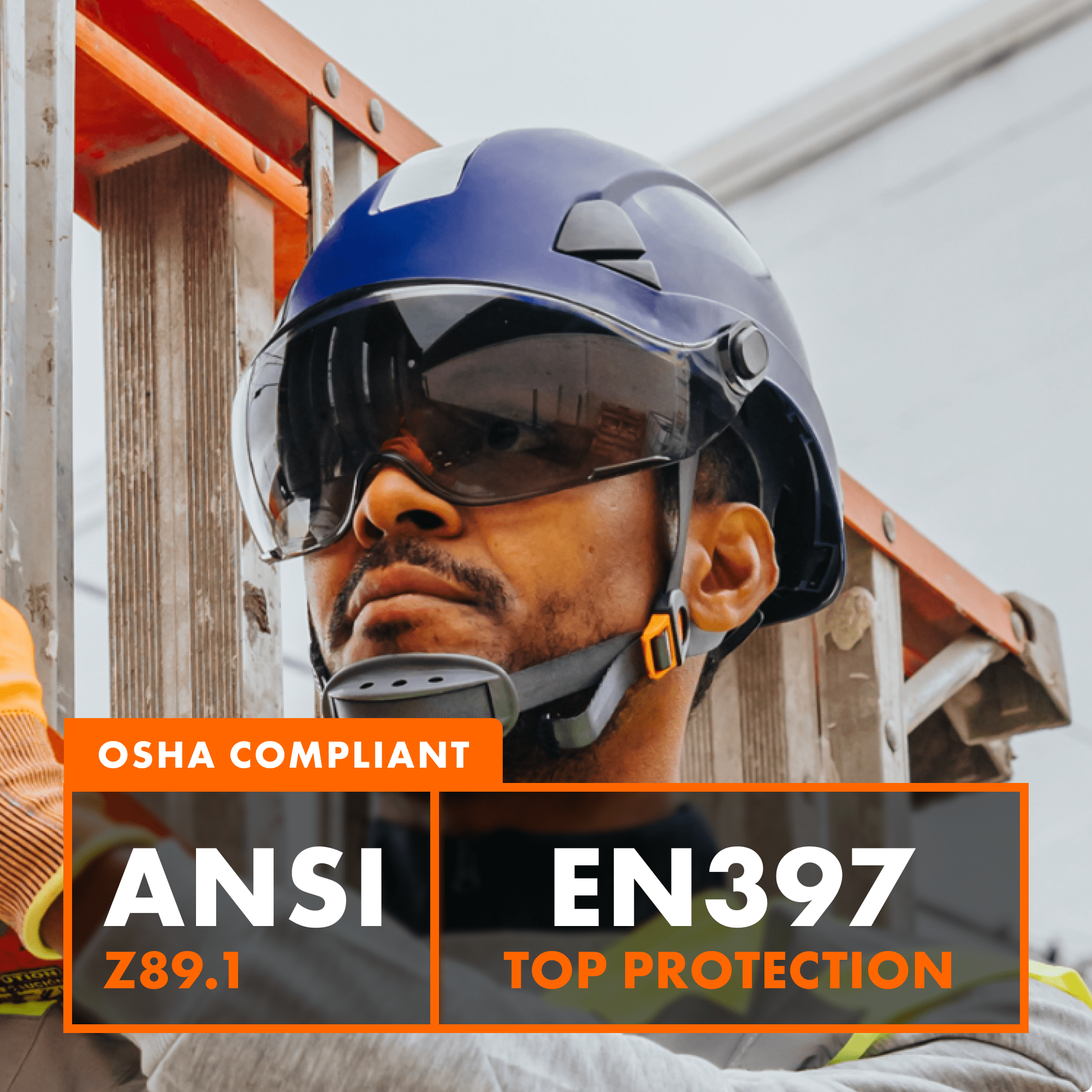
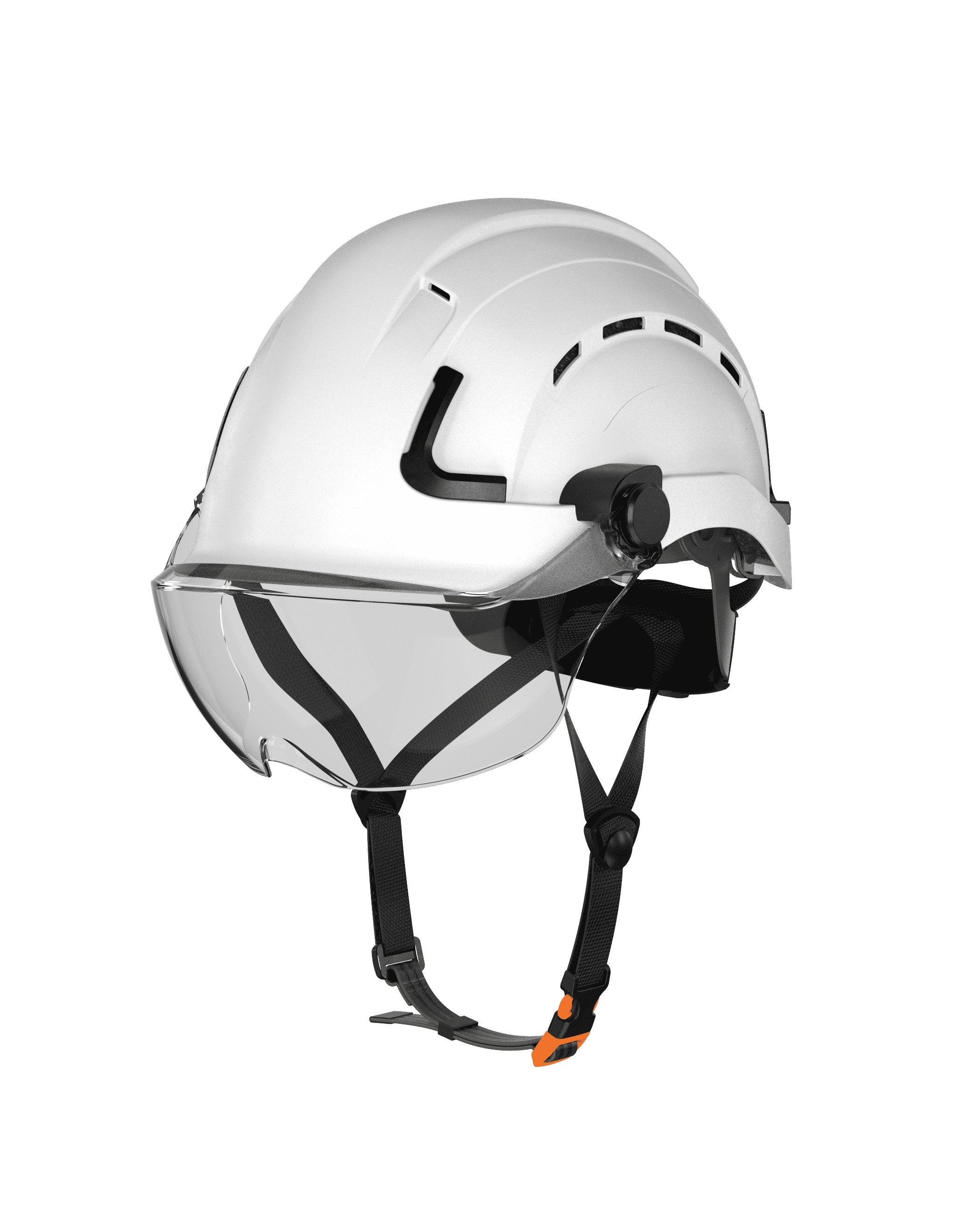
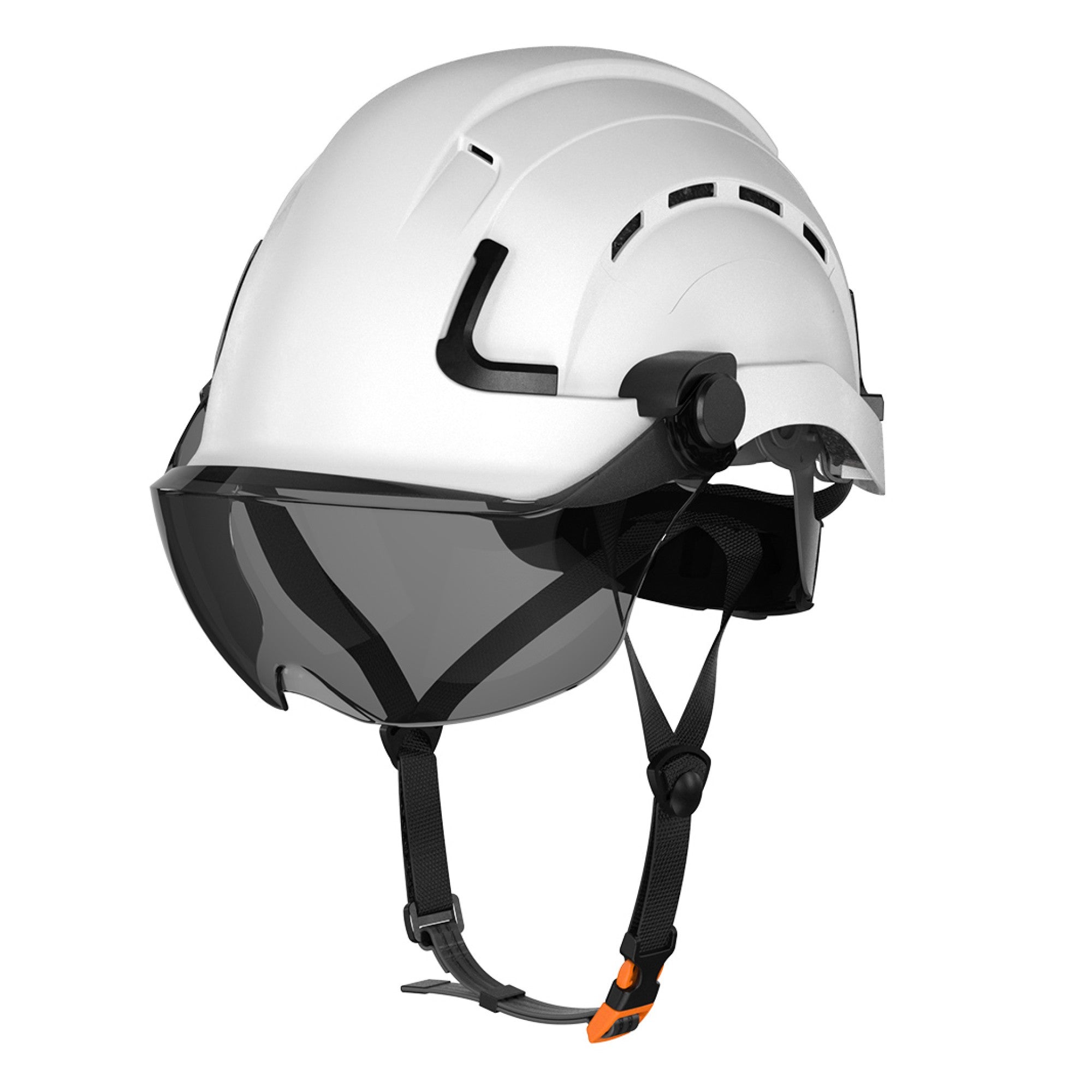
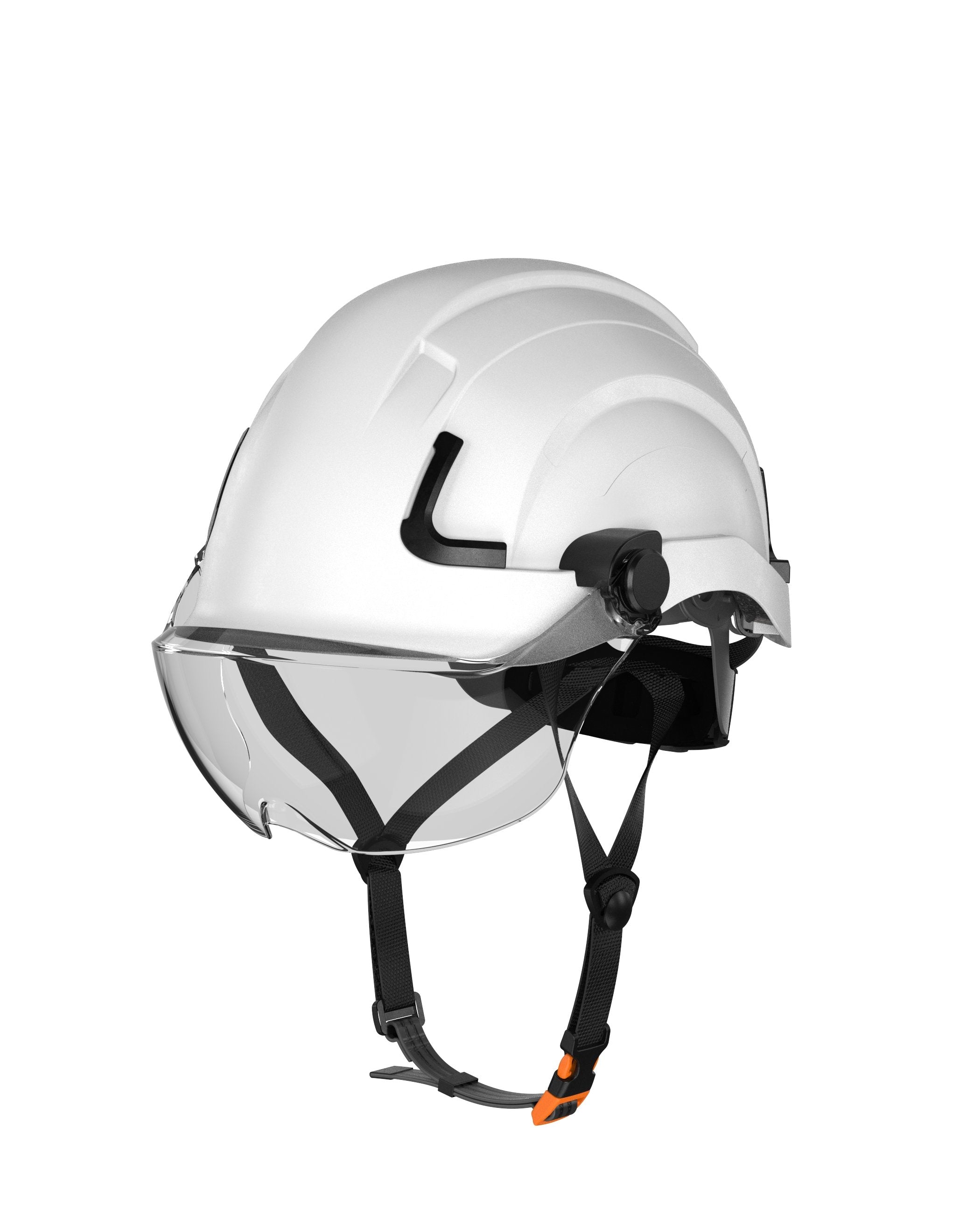
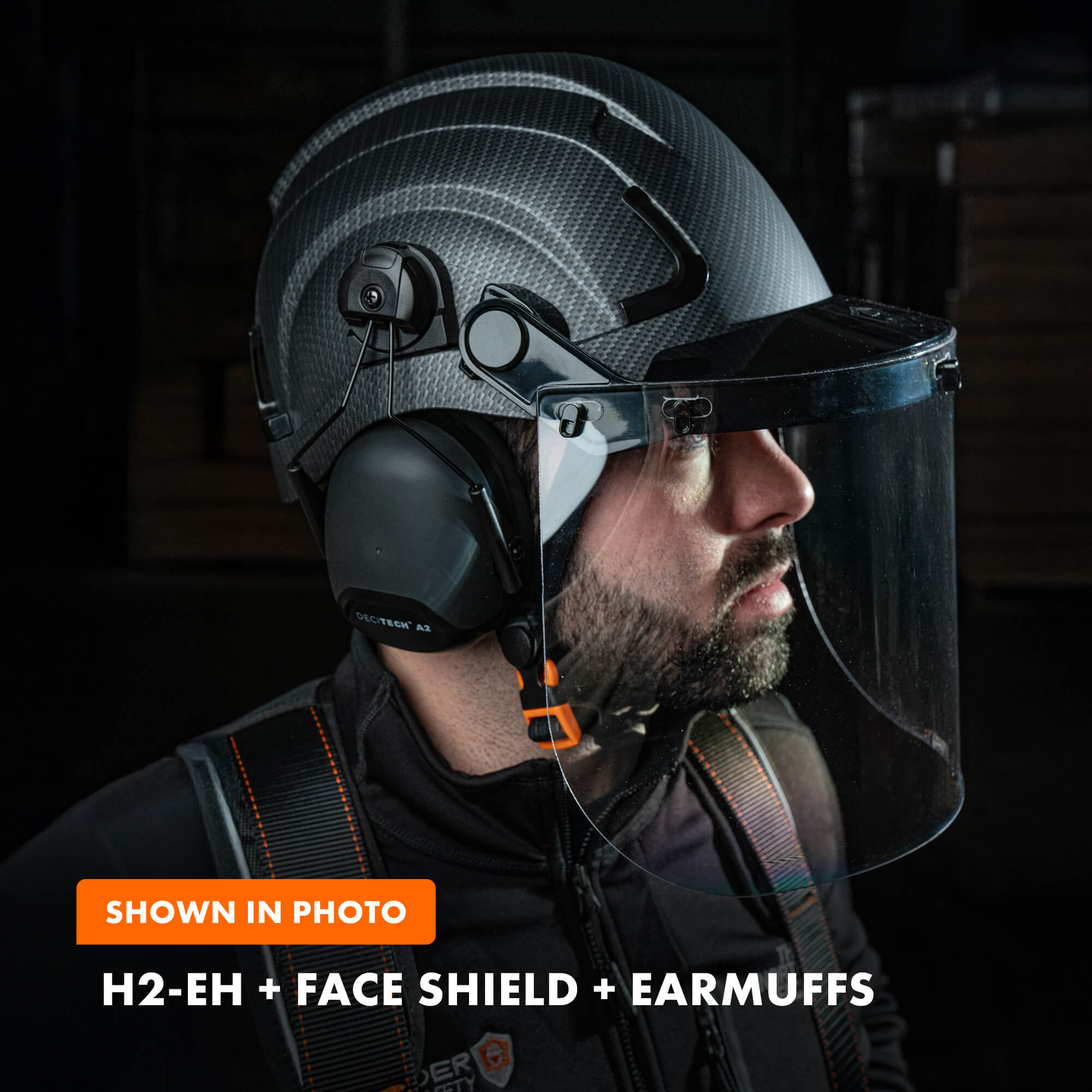
Defender Safety accessories are purpose-built exclusively for Defender Safety helmets, ensuring a secure fit, seamless integration, and reliable performance. Compatible options include clear and tinted visors, polycarbonate face shields, mesh shields for forestry and arborist work, earmuffs, headlamps, winter liners, reflective stickers, and replacement suspension systems—all engineered specifically for our helmet platform. The H2 series features built-in accessory slots, allowing for quick, tool-free attachment designed to work only with Defender Safety components.
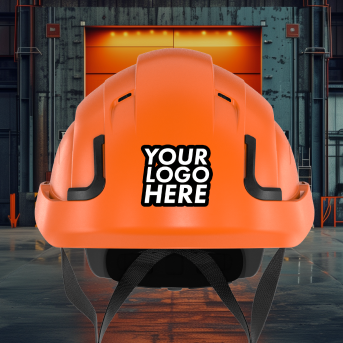
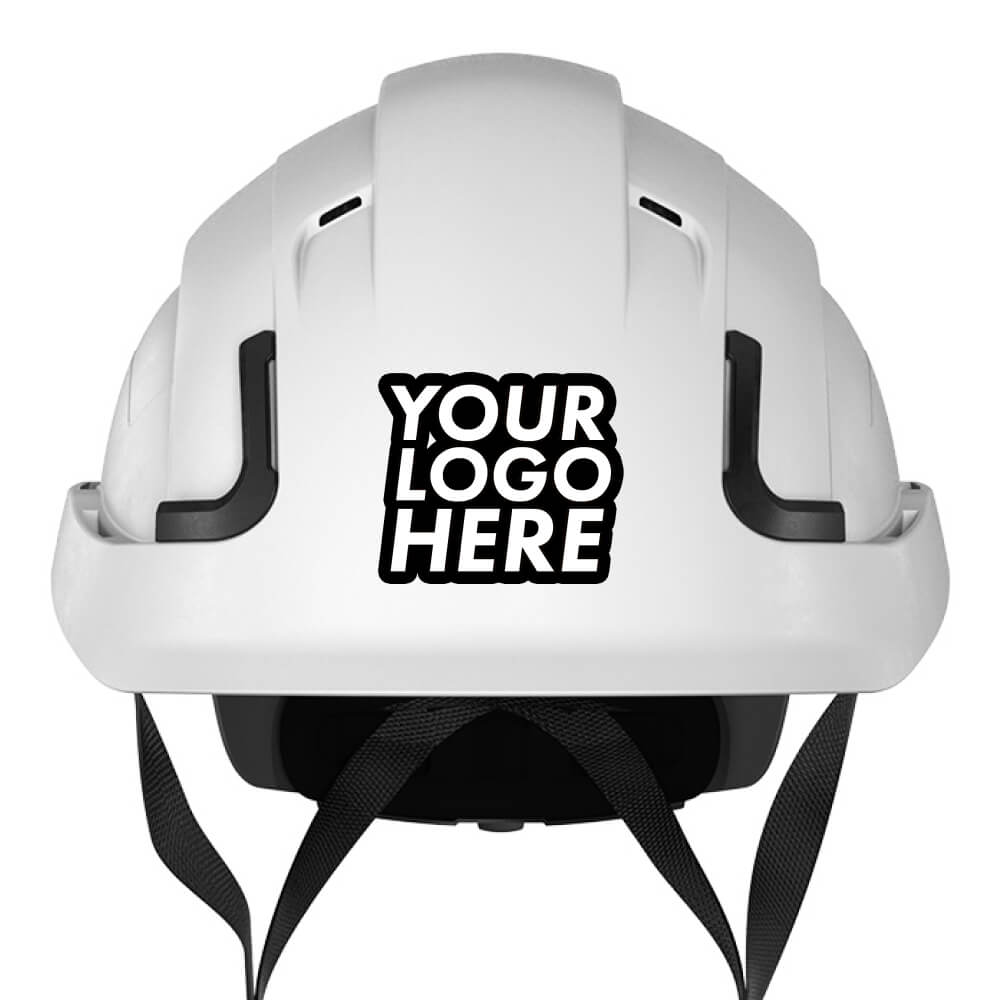
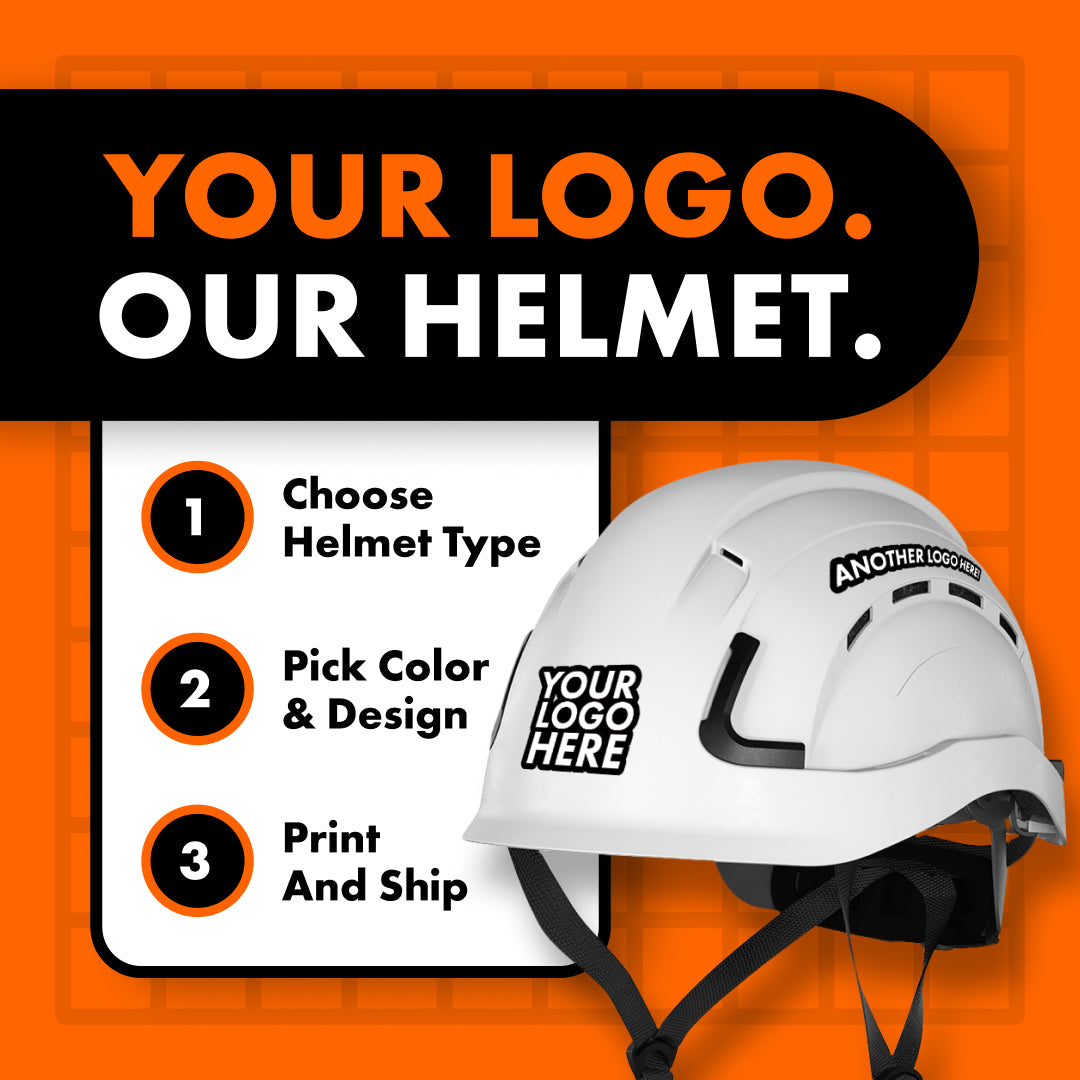
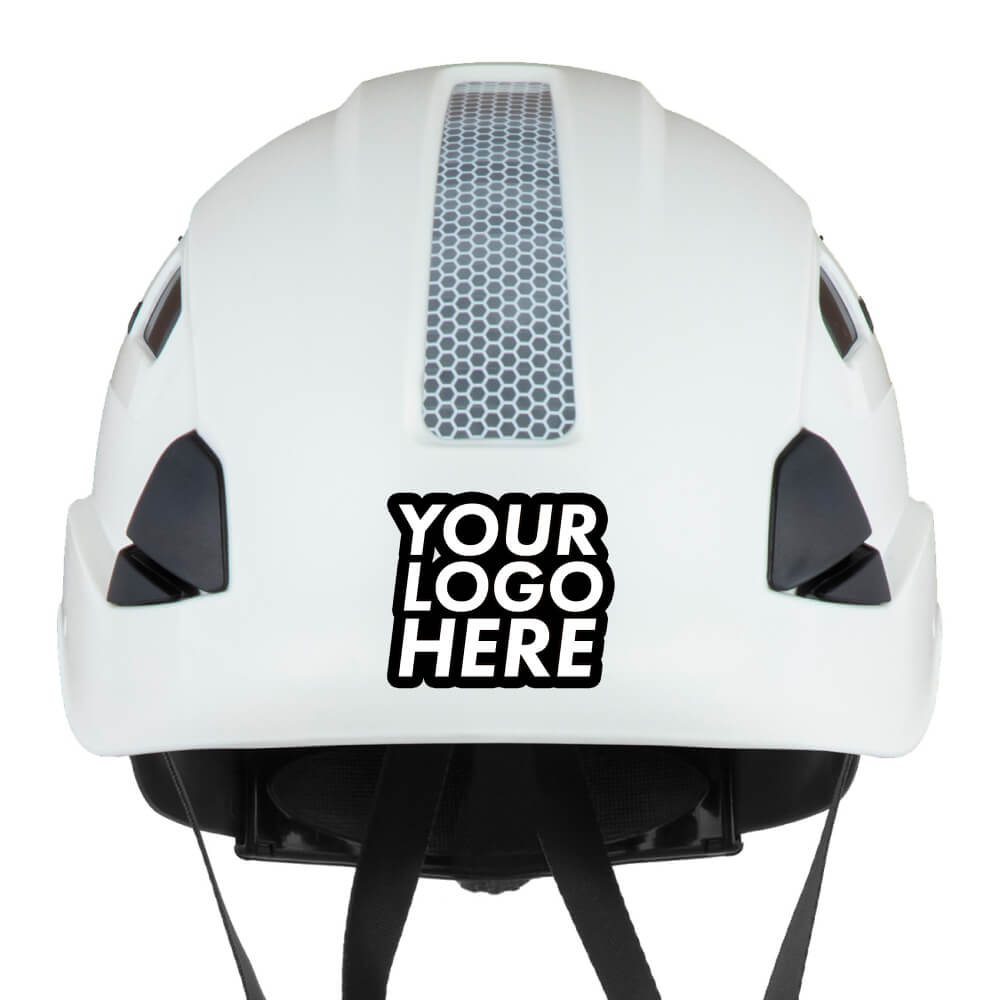
Yes. Defender Safety offers custom logo printing on both H1 and H2 helmets using professional pad-printing technology. You can print your logo in up to four colors on the front, back, left, or right side of the helmet. Pad-printed logos are resistant to peeling, cracking, and fading, even in demanding jobsite conditions. Every order includes a digital proof for your review before production begins.
Production typically takes 5 to 10 business days after you approve the digital proof. The proofing process itself is quick -- Defender Safety's team creates a digital mockup of your logo on the helmet for your sign-off before production begins. For urgent needs, expedited printing may be available.
CARE, COMPLIANCE + JOB SITE RULES
Most manufacturers recommend replacing the helmet shell every 5 years from the date of manufacture and the suspension system every 12 months. However, if the helmet sustains any significant impact, shows cracks, dents, or UV degradation, it should be replaced immediately regardless of age. Harsh environments -- extreme heat, UV exposure, chemical exposure -- can shorten the lifespan. Inspect your helmet before every use.
Look inside the helmet shell for a clock-style date stamp. It shows a year in the center with numbers 1 through 12 around the edge (representing months). An arrow points to the month of manufacture. This date is your starting point for calculating the helmet's service life.
Wash the shell with mild soap and warm water. Use a soft cloth or sponge -- never abrasive materials. Remove the suspension and padding and wash separately by hand or in a washing machine at 30 degrees C (86 degrees F) using a mild detergent and a wash bag. Never use solvents, petroleum-based cleaners, or harsh chemicals, as these can degrade the shell material. Air dry completely -- avoid direct heat sources like hair dryers or heaters.
Replace immediately if the helmet has taken a significant impact or shows visible damage (cracks, dents, gouges, or deformation). Replace the shell every 5 years from manufacture date, or sooner if exposed to heavy UV, extreme temperatures, or chemical exposure. Replace the suspension every 12 months. If the helmet no longer fits securely after adjustment, replace the suspension or the helmet. When in doubt, replace it.
Yes, with conditions. OSHA allows stickers and decals as long as the manufacturer authorizes the modification, or the employer can demonstrate that the stickers do not affect the helmet's structural integrity. Place stickers at least three-quarters of an inch from the helmet's edge. Do not use stickers to cover up damage -- this prevents proper inspection. Common acceptable uses include OSHA training credentials, company identification, and safety messaging. Check your helmet manufacturer's guidelines before applying.
Only if the manufacturer specifically approves the paint type and application method. Many paints contain solvents that can degrade the helmet shell material (HDPE, ABS), weakening its protective properties. If you need a custom color or branding, use the manufacturer's recommended pad-printing or decal options instead of painting. Defender Safety's custom logo printing service is the safest way to customize your helmet's appearance.
Yes. Choose a vented (Class C) helmet for maximum airflow in hot conditions. Vented helmets allow air circulation through the shell to help regulate head temperature. For environments with both heat and electrical hazards, use a non-vented Class E helmet with moisture-wicking liner padding. Helmets rated "HT" (High Temperature) on the label have been tested for use in high-temperature environments or near molten materials.
Yes. Use a helmet-compatible winter liner that fits between the suspension system and your head. These liners provide insulation and wind protection without interfering with the helmet's fit or protective performance. Helmets rated "LT" (Low Temperature) on the label have been tested in cold conditions. Avoid using bulky hats or beanies that could push the helmet off your head or interfere with the suspension.
Yes. Prolonged UV exposure degrades the shell material over time, making it brittle and reducing impact resistance. Signs of UV damage include fading, chalky texture, or a dull appearance. Store helmets out of direct sunlight when not in use. If your helmet shows signs of UV degradation, replace it immediately -- even if it has not reached its 5-year service life.
Safety helmet shells are water-resistant and will protect your head in rain. However, the interior padding and suspension can absorb moisture. After working in wet conditions, remove padding and allow it to air dry completely. Some manufacturers offer water-resistant liner upgrades for frequent wet-weather use. Non-vented helmets provide better rain protection than vented models since there are no openings for water to enter.