
THE SWITCH EVERYONE RECOMMENDS, BUT NOT EVERYONE MAKES
Type II safety helmets have been OSHA-recognized and actively recommended by safety professionals for years now. Industry experts have long anticipated a steady transition away from traditional hard hats, and yet plenty of crews are still wearing traditional Type I hard hats to this day. If the case for switching is as strong as the industry says, why hasn't the switch taken over the entire industry?
To answer that question, researchers at NC State and the team at Jobsite Safety Institute conducted a study to see the real adoption patterns and barriers of these Type II helmets.
WHAT THE RESEARCH FOUND
Adoption research in this space consistently points to the same handful of barrier points, which are the following:

- Cost: Modern safety helmets typically cost more per unit than a basic Type I hard hat, and for large crews that difference adds up fast even when the safety case is accepted.
-
Comfort and heat: Helmets with more coverage and retention hardware can run hotter and heavier than a stripped-down hard hat, which matters enormously on an 8 or 10-hour shift outdoors.
- Culture and habit: A hard hat someone has worn for 20 years is a hard habit to change, independent of what the data says, and crews view a helmet upgrade as an attack on how they've always worked, and not just new PPE.
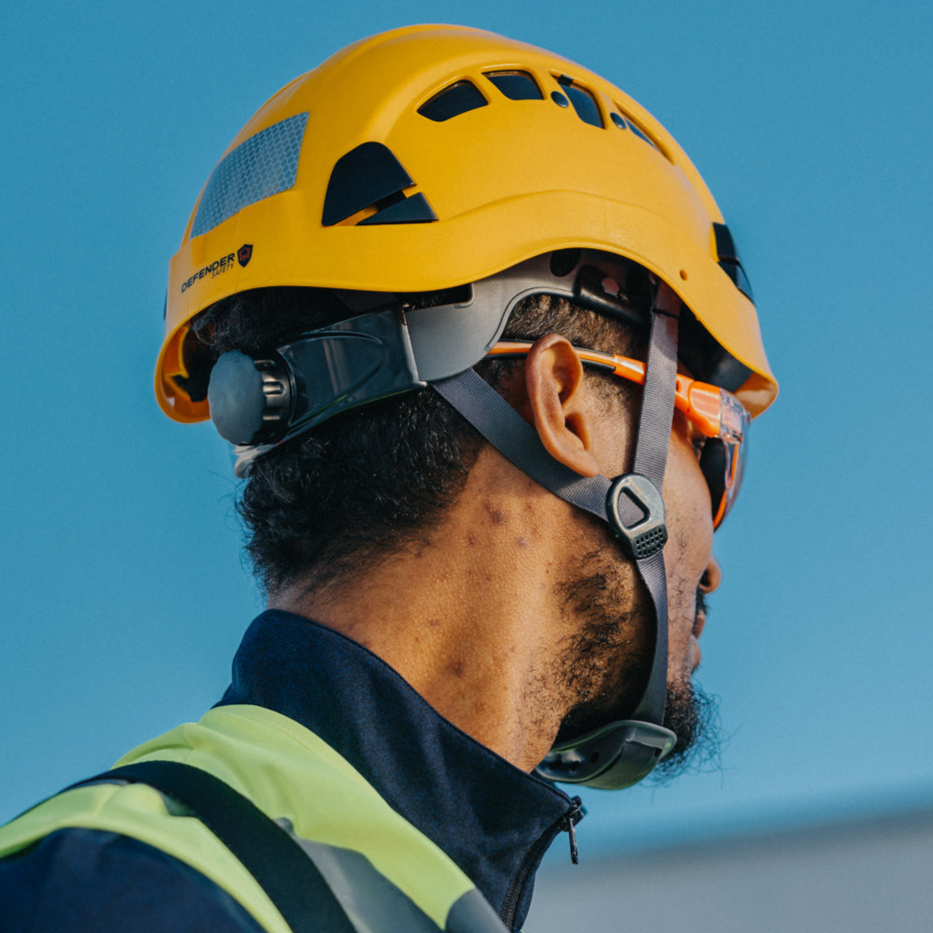
- Fit and sizing constraints: Modern helmets are equipped with chinstraps when compared to their hardhat counterparts. However, there is no truly universal chinstrap that can fit all different types of user's head shape, which causes even more friction towards adoption.
FIT, SPECIFICALLY, IS HAVING A MOMENT
 Of those four barriers, fit is where it has shifted the most recently. If a helmet doesn't accommodate a crew's diverse head sizes, fit issues compound the existing friction of cost, comfort, and habit. This leads to non-compliance and undermines the entire transition. OSHA's 2025 amendment to 29 CFR 1926.95 made PPE fit an explicit, individual requirement rather than a one-size-fits-most assumption, specifying head protection directly. Our guide to choosing the right safety helmet covers what fit actually means in practice and on the jobsite.
WHAT THIS MEANS FOR A CREW CONSIDERING THE SWITCH
The research shows that for successful adoption making the switch requires evaluating cost, comfort, culture, and fit holistically as an integrated package. Overlooking even a single factor can trigger pushback and undermine safety compliance, regardless of how advanced the helmet design is.
To ensure smooth adoption, leadership must actively assess the crew's perspective and build a thoughtful rollout strategy. Key questions to evaluate before executing a transition include:

- Sizing and Fit Assessment: Has the full range of head sizes and shapes across the crew been accurately measured, or are sizing assumptions being made?
- Comfort and Field Feedback: Are ventilation, weight, and thermal comfort being tested in real jobsite conditions prior to full deployment?
- Communication and Rollout Strategy: Is the initiative framed as a proactive investment in worker safety, rather than a top-down criticism of existing habits?
While the safety benefits of modern helmets are well established, achieving full, daily compliance hinges on understanding crew needs and planning every step of the transition.